
Insuring Junior Martial Arts Programs
Why Insuring a Junior Program Means Insuring More Than Just the Mat
Junior martial arts programs are the lifeblood of the Australian martial arts community. From four-year-olds in their first karate uniform to teenagers competing at a national level, children represent the next generation of practitioners — and they bring with them a specific set of insurance considerations that every school operator and club head needs to understand.
We work with schools and clubs that run junior programs across a wide range of disciplines: karate, taekwondo, judo, BJJ, Muay Thai, kung fu, and more. The insurance questions that arise in the junior space are distinct from those relating to adult programs, and getting them right matters — both for the protection of the children in your care and for the long-term security of your school.
This article covers the key insurance considerations for operators running junior martial arts programs, including Public Liability, Personal Accident, duty of care obligations, supervision requirements, and the specific question of children competing in overseas events.
Why Junior Programs Require Special Attention
Children are not simply smaller adults in an insurance context. They carry a different risk profile, they are owed a higher standard of duty of care under Australian law, and claims involving minors are treated differently by insurers and the legal system alike.
When a child is injured in your class — whether it is a minor incident or something more serious — the legal and insurance consequences can be significantly more complex than an equivalent adult injury. Parents have the right to make claims on behalf of their children, limitation periods for claims by minors may be extended compared to adult claims, and the standard of supervision expected of an instructor working with children is higher than that applied to adult participants.
This is not a reason to avoid running junior programs — quite the opposite. Well-run junior programs with appropriate cover and sound risk management practices are a wonderful and legally defensible part of any school's operation. But it is a reason to ensure that your insurance arrangements and operational practices are specifically designed to accommodate the junior cohort.
Public Liability: Ensuring Children Are Covered
A standard martial arts school Public Liability policy will typically cover all participants in your classes, including children, as third parties who could be affected by your business activities. However, there are some important things to confirm with your broker.
Age ranges declared at application. When you take out or renew your policy, you will typically be asked about the age profile of your student body. If you run a program that includes very young children — particularly those under five or six years of age — make sure this is disclosed. Some policies have age-related conditions or may restrict cover to students above a certain age without specific arrangement.
Activity types for juniors. If your junior program includes activities that are more intense or contact-heavy than a typical children's class — for example, junior sparring or junior competition training — this should be disclosed and confirmed as covered. A policy that covers adult contact sparring may still have conditions around the same activities for children.
Parent and guardian participation. Many junior programs, particularly for very young students, involve a parent or guardian accompanying their child on the mat during class. If parents are physically participating — not just observing — they are in the training space and their safety is a consideration for your Public Liability policy. Confirm with your broker how this is treated.
Venue considerations. If you run junior programs at a school, community centre, or other third-party venue, confirm that your cover extends to activities at those locations. Council and school venues almost always require you to produce a current certificate of currency before allowing junior classes to proceed.
Personal Accident Cover for Junior Students
Public Liability insurance responds when a claim is made against your school — it is essentially a liability cover that protects you as the operator. But what protects the child themselves if they are injured?
Group Personal Accident cover for students — including junior students — provides financial support directly to the injured participant. Depending on the policy structure, it can cover:
Medical expenses: Out-of-pocket costs for treating the injury, including physiotherapy, specialist consultations, imaging, and other treatment not fully covered by Medicare or private health insurance. For children's injuries, these costs can accumulate quickly, particularly if the injury requires extended rehabilitation.
Non-Medicare medical expenses: Some Personal Accident policies include benefit components specifically for expenses that fall outside Medicare's scope — dental injuries from contact training, for example, are a common junior martial arts injury that may not be well covered by standard health arrangements.
Lump-sum accidental death and disability benefit: While rare in the junior context, a meaningful permanent injury to a child can have lifelong consequences, and a lump-sum benefit provides financial support for the child and family in those circumstances.
We arrange Group Personal Accident cover for martial arts schools that includes both junior and adult students. Many schools choose to include this as part of their membership fee structure, providing a layer of personal protection for all students as a standard inclusion. This is both a genuine benefit to your members and a demonstration that your school takes its duty of care seriously.
Supervision Standards for Junior Classes: What Insurers Expect
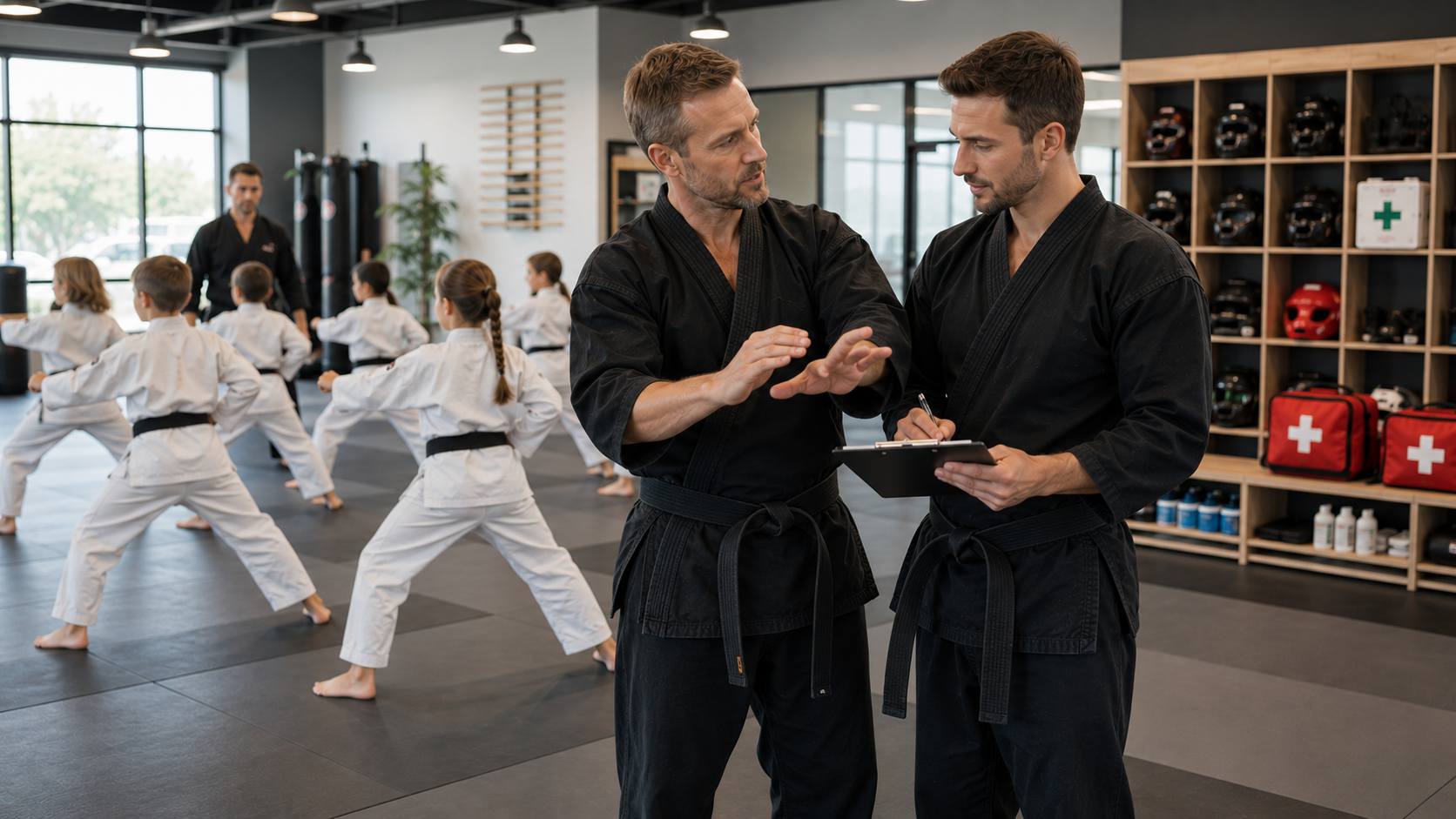
One of the most important risk management considerations for junior programs is supervision. Insurers assess the supervision arrangements for junior classes carefully, and appropriate supervision is also a fundamental component of your duty of care as an operator.
Student-to-instructor ratios. While there is no universal regulatory standard for martial arts instructor-to-student ratios in Australia (requirements vary by state and by the nature of the activity), insurers and general duty of care principles suggest that junior classes should be supervised with appropriate ratios for the age and activity involved. Very young children (five and under) require closer supervision than teenagers. Classes that include contact work require tighter supervision than those that are purely form-based or kata-focused.
Instructor qualifications for junior programs. Working with children adds a layer to instructor qualification requirements that goes beyond martial arts rank and accreditation. In most Australian states and territories, instructors who regularly work with children are required to hold a current Working With Children Check (WWCC) or equivalent screening clearance. This is a legal obligation, not merely a best practice recommendation — and failing to comply can have serious consequences.
Documentation of supervision arrangements. Keep records of the supervision structure for your junior classes: who is supervising, their qualifications, their WWCC status, and the student numbers at each session. This documentation is valuable not just for risk management purposes but also as evidence of your operating standards if a claim or complaint arises.
Junior Sparring and Contact Training
This topic generates significant discussion in the martial arts community, and from an insurance perspective it warrants specific attention.
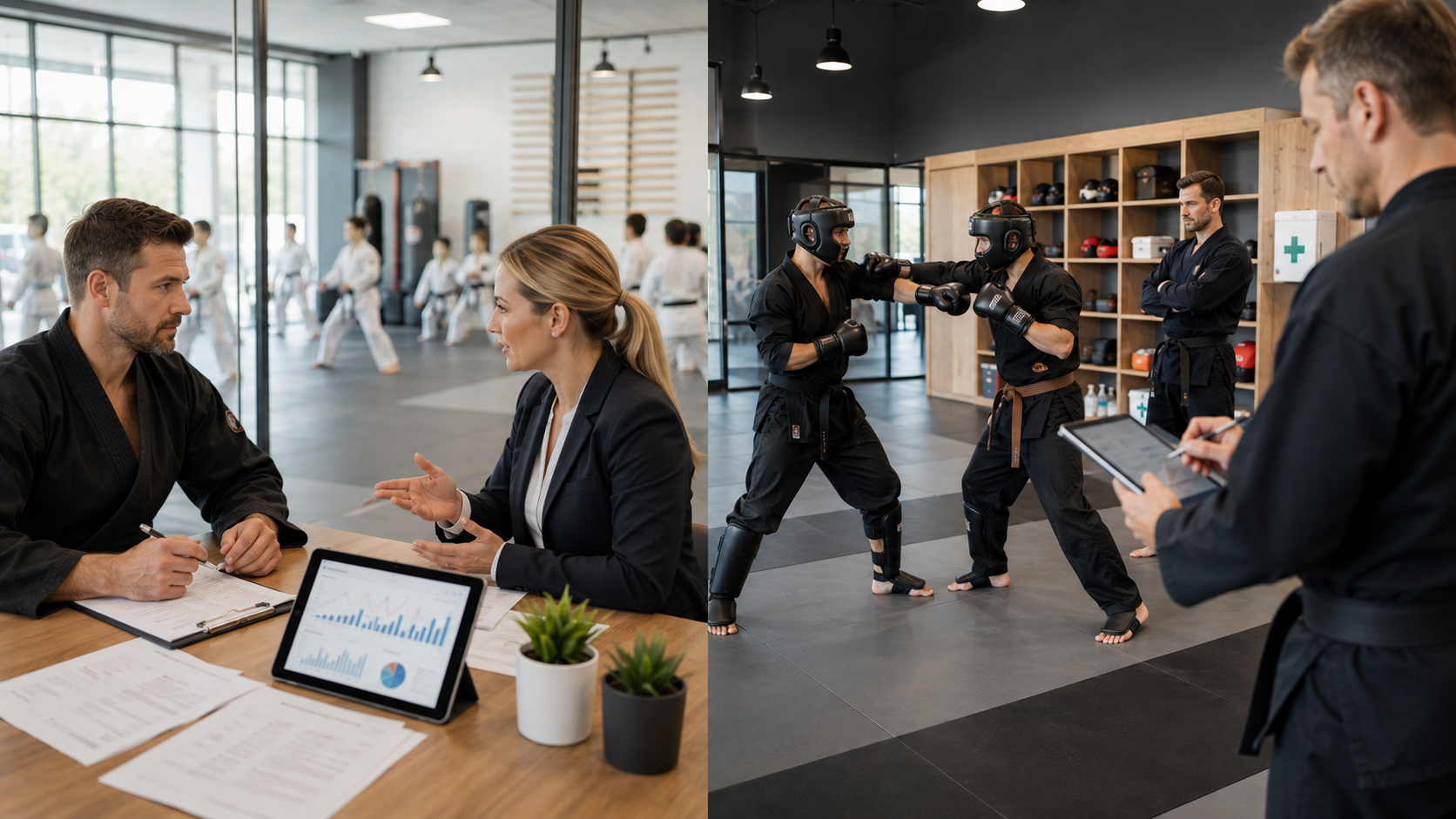
Whether and how contact training is appropriate for junior students depends on the discipline, the age and experience of the students, the equipment used, and the supervision in place. Many disciplines have well-developed junior sparring frameworks — light contact with full protective equipment for older junior students, no contact or minimal contact for younger ones.
From an insurance standpoint, the important thing is that your policy explicitly covers the nature and level of contact training you conduct with junior students. If you run junior sparring sessions — even light-contact sessions — confirm that this is within your policy's scope.
Some insurers impose conditions on junior contact training: minimum age requirements for sparring participants, mandatory protective equipment lists, supervision ratio requirements, or restrictions on the type of techniques that can be applied in junior sparring rounds. Understand what conditions apply under your policy and ensure your junior program complies with them.
Junior Competition: Local, National, and International Events
Competitive martial arts is a rewarding path for many junior practitioners, and Australian students compete at local, national, and international levels across a wide range of disciplines.
Local and national competition. If your school enters students in local or national competitions, the insurance arrangements for those events are typically the responsibility of the event organiser or hosting association. As a school operator, your standard policy covers your training activities leading up to the competition. Confirm with the event organiser what cover is in place for competition participants.
International competition for junior athletes. This is where things become significantly more complex. If one of your junior students — including a young child — is travelling overseas to compete, the insurance requirements need careful attention. Travel insurance for martial arts competition is not the same as standard travel insurance. For children specifically, the policy needs to cover the minor as a participant in competitive martial arts, at the specific destination, for the specific discipline.
Medical expenses for a child requiring hospitalisation overseas — particularly in countries like the United States or Japan — can be financially devastating for a family without appropriate cover. The emotional stress of managing a child's medical situation in a foreign country is already significant; the financial dimension should not add to it.
Our group travel insurance is structured for clubs and associations travelling as a group. If your school is taking a junior team overseas for competition, speak to us well in advance about group travel cover for the delegation.
Child Safety Policies and Risk Management
Beyond insurance, operating a junior martial arts program comes with obligations around child safety and safeguarding that are increasingly formalised in Australian law and community standards.
A comprehensive child safety policy for your school should include: mandatory Working With Children Checks for all instructors and regular volunteers who work with junior students, clear protocols for one-on-one interactions between instructors and students, defined procedures for reporting concerns about child wellbeing, appropriate communication protocols (including guidelines around social media and direct communication between instructors and junior students), and a complaints and grievance process that gives junior students and their families a clear avenue to raise concerns.
These policies are not just ethically important — they are increasingly expected by venues, councils, and insurers as evidence that your school operates responsibly. Some insurers may ask about your child safeguarding arrangements as part of the application process.
We can point our clients toward resources and templates to support the development of appropriate child safety policies. Our value-added support package for clients includes practical business resources that go beyond just the policy document.
The Whole Picture: Cover That Reflects Your Junior Program
Running a junior martial arts program is one of the most rewarding things you can do as an instructor. It requires appropriate cover, sound operating practices, and a genuine commitment to the wellbeing of the children in your care.
We understand the junior martial arts environment. We can arrange cover that genuinely reflects your program the age ranges you work with, the disciplines you teach, the supervision arrangements you have in place, and the competitive pathway your students are following. We will also ensure that the personal accident component provides meaningful protection for your junior students, not just a nominal inclusion.
Contact us at maainsuranceservices.com.au or call our office to discuss junior program cover. Getting this right from the start is always better than discovering a gap after an incident has occurred.
This article contains general information only and does not take into account your individual circumstances, objectives, or needs. Please review the relevant Product Disclosure Statement and speak with a qualified adviser before making any insurance decision.