
Building a Safe Sparring Culture: The Standards That Protect Everyone in the Room
Why Sparring Culture Is a Risk Management Issue as Well as a Training Philosophy
Sparring is one of the most valuable and most risky training activities in a martial arts school's curriculum. Managed well, it develops genuine reactive ability, tests technique under real pressure, and builds the kind of composure under physical stress that no padwork or kata alone can produce. Managed poorly, it produces injuries, creates fear and aversion in less confident students, and generates the kind of serious incidents that lead to insurance claims and reputational damage.
The culture of sparring in your school the implicit and explicit standards around intensity, partner selection, ego management, and instructor oversight — is one of the most important risk management elements in your entire operation.
The Ego Problem
Most serious sparring injuries in training environments are not caused by technical failures. They are caused by unchecked ego — by a student who cannot tolerate being caught, who escalates intensity in response to being outperformed, or who brings external stress into the training room and discharges it through inappropriate intensity in sparring.
An instructor who has clearly articulated standards around sparring intensity, who enforces these standards consistently rather than selectively, and who addresses ego-driven escalation directly and promptly creates a significantly safer environment than one who allows these dynamics to exist on the implicit understanding that "sparring is sparring."
Partner Selection
Pairing students appropriately by size, experience, and intensity where possible, and by explicit discussion of the session's goals is one of the most important and undervalued skills in an experienced instructor's repertoire. A significant proportion of sparring injuries arise from mismatched pairings, particularly when a more experienced or physically larger student is not explicitly briefed on the responsibility this creates toward their less experienced partner.
This briefing, given clearly and consistently, changes the dynamic significantly. The more experienced student who understands that their role in a mismatched pairing is to develop and challenge their partner rather than to demonstrate superiority creates a completely different training experience to one operating without this frame.
Structuring Sparring by Class Level and Intent
Not all sparring should look the same, and one of the clearest markers of a well-run program is that sparring intensity and rule set are explicitly tied to the level and purpose of the class rather than left to whatever intensity the room happens to settle into on a given night. Technical sparring designed to test a specific skill under light resistance is a different activity to full-intensity competition preparation sparring, and students should be told, before the round begins, which version they are doing and what the expected intensity is.
Schools that clearly label sparring rounds light contact technical rounds, moderate intensity rounds, hard competition-preparation rounds reserved for a specific, experienced group give students and instructors alike a shared reference point for what is and is not appropriate in that particular round, which removes a significant amount of the ambiguity that otherwise allows intensity to drift upward unchecked.
The Instructor's Active Role During Sparring
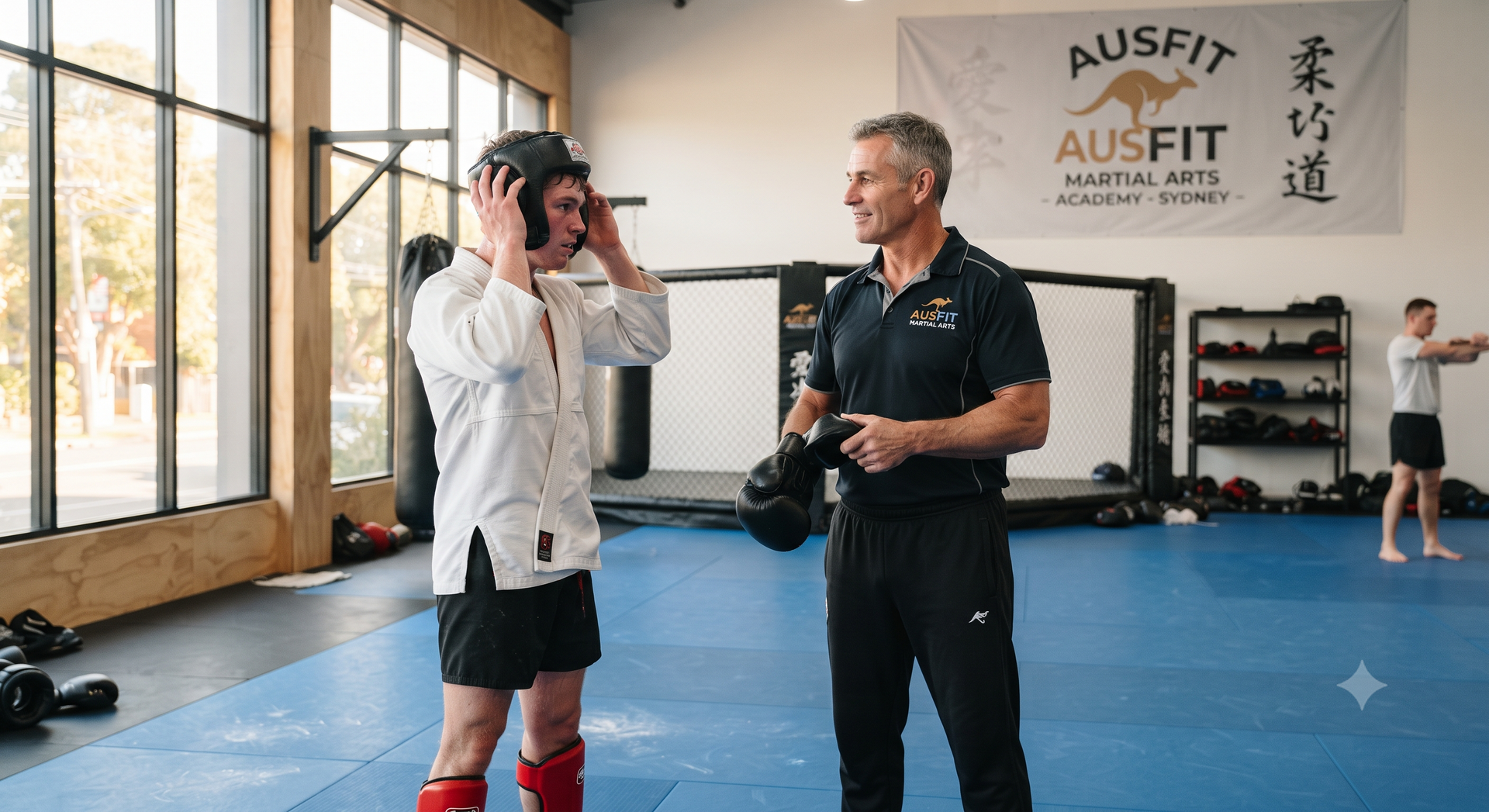
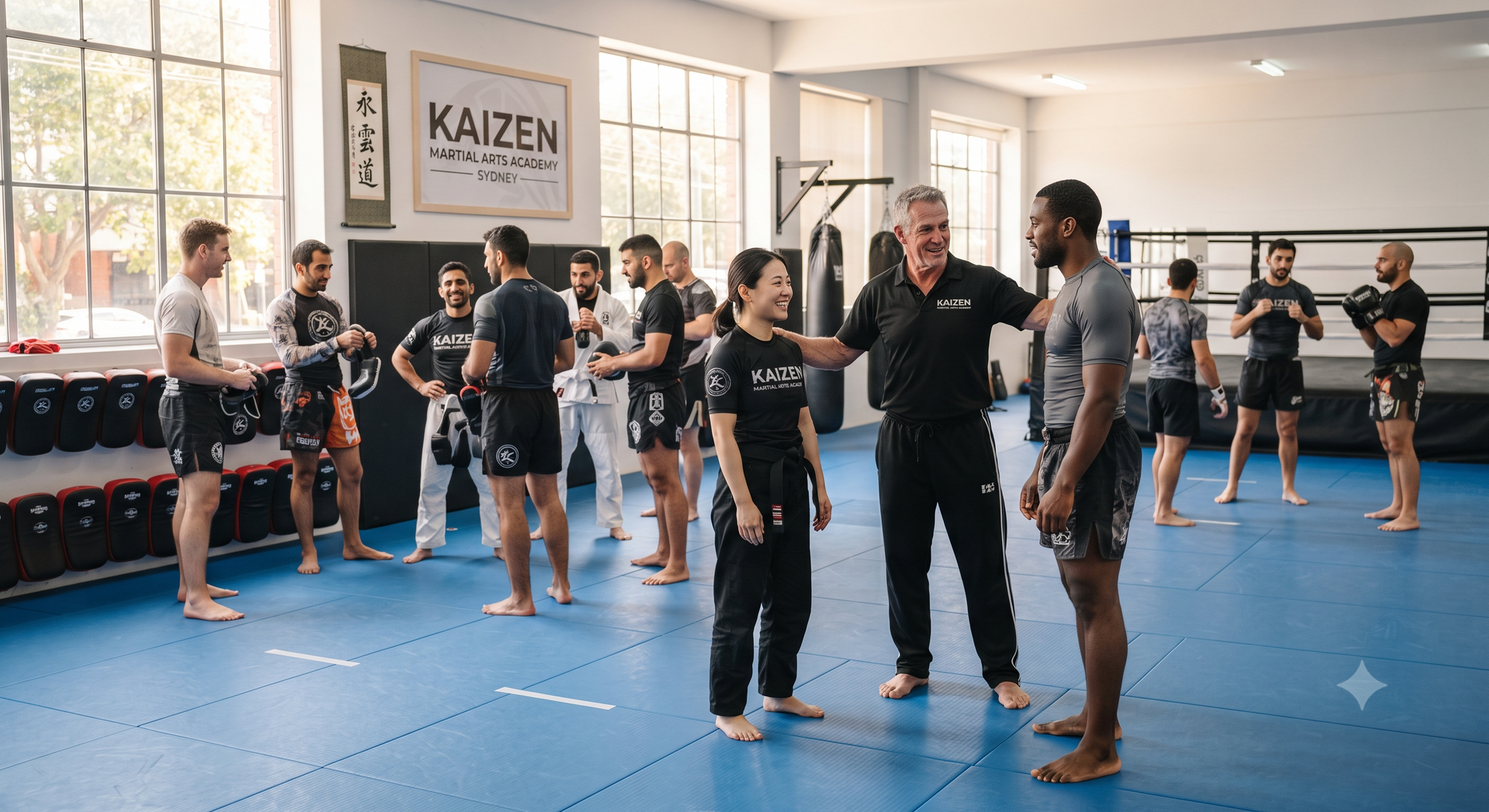
Sparring supervision is not a passive activity of standing at the edge of the mat. An instructor actively supervising sparring is watching for early signs of escalating intensity, watching for signs that a student is struggling physically or in confidence and is prepared to stop a round immediately the moment either concern arises, rather than waiting for an injury to force the intervention. Instructors who circulate actively, who are close enough to intervene verbally before contact escalates further, and who are willing to stop a round and reset the intensity expectation on the spot are exercising exactly the kind of active supervision that materially reduces injury risk.
Communicating Standards to New Students
New students arrive with wildly varying expectations of what sparring involves, shaped by whatever they have seen in film, competition footage, or their own limited prior experience. Explicitly communicating your school's sparring standards during a new student's early weeks what intensity is expected, what control looks like, what happens if someone escalates inappropriately — sets the cultural expectation from day one rather than leaving a new student to infer the standard from observation alone, which is a much slower and less reliable way for a norm to take hold.
Protective Equipment and Sparring Attire
Appropriate protective equipment gloves, shin guards, mouthguards, headgear where relevant to the style and intensity — is a baseline expectation for any contact sparring, and schools should be explicit and consistent about minimum equipment requirements for each level of sparring intensity rather than allowing this to be treated as optional or left to individual student discretion. Equipment condition matters as much as equipment presence: worn-out gloves or a mouthguard that no longer fits properly do not provide the protection the equipment is nominally there to offer, and periodic checks of student equipment are a worthwhile, low-effort addition to an instructor's routine.
When to Pull a Student From Sparring Entirely
Beyond managing an individual round, instructors should be willing to remove a student from sparring activity altogether for a period — not as punishment, but as a safety measure where a pattern of behaviour, a recent injury, a suspected concussion, or a visible emotional state suggests that student should not currently be engaging in live contact training. This is a judgement call that requires instructor confidence to make and communicate clearly, and schools with a genuinely safe sparring culture are ones where instructors feel empowered to make this call without it being treated as an overreaction by the student or their training peers.
Documentation and the Insurance Position
Sparring sessions that produce injuries generate the most common and most complex claims in martial arts insurance. The quality of your supervision, your pairing process, and your overall sparring culture directly affects how these claims are investigated and what position your insurer is in when responding to them.
We have worked with clubs on incident reviews that provide clear evidence of appropriate sparring culture and clubs where this culture was absent. The difference in how claims proceed is significant.
Everyday Training Sparring Versus Competition Preparation
One of the clearest sources of confusion, and one of the more common causes of drift toward inappropriate intensity, is a failure to distinguish between the sparring that supports everyday skill development and the sparring appropriate only for a small group of experienced students actively preparing for genuine competition. Competition-preparation sparring, by its nature, involves a level of intensity and realistic pressure that is inappropriate for the broader student body and should be clearly ring-fenced — run separately, with separate participant eligibility criteria, and ideally under closer, more experienced supervision than general class sparring.
Schools that blur this line, allowing competition-level intensity to leak into general class sparring because a few competitive students are present in the room, create a mismatch of expectations that is a recurring contributor to avoidable injury. Being explicit about which sparring sessions are open to the general student body and which are reserved for a defined competitive group removes this ambiguity.
Reviewing Your Sparring Culture Objectively
It is worth periodically stepping back and honestly assessing your own school's sparring culture rather than assuming existing practice is automatically appropriate simply because it has not yet produced a serious incident. Asking new students, anonymously if necessary, how safe and controlled they found their early sparring experiences can surface issues that instructors themselves, immersed in the culture, may no longer notice. This kind of honest review, undertaken periodically rather than only after something goes wrong, is one of the more valuable things a club owner can do for both student safety and their own long-term insurance position.
Leading by Example
The senior students and assistant instructors in any school are constantly, whether consciously or not, being observed by newer members for cues about what acceptable sparring intensity and behaviour actually looks like in practice, regardless of what is stated in a welcome handout. Senior figures who consistently model controlled, respectful sparring, even when they are clearly capable of far more do more to establish a genuinely safe culture than any written policy alone. Instructors who allow their most senior students to spar with visibly excessive intensity, even occasionally, undermine the credibility of every stated safety standard in the school.
Culture as Your Best Risk Management Tool
Of everything discussed across our health and safety content, sparring culture is arguably the hardest to regulate through paperwork alone and the most dependent on genuine day-to-day leadership from instructors. A written policy sets the standard; it is the instructor's consistent, visible enforcement of that standard, session after session, that actually determines whether your school is a genuinely safe place to train or one where good intentions exist mainly on paper.
We are always glad to talk through how your school's sparring standards and documentation sit alongside your current policy, particularly if your program has grown or changed in intensity since cover was last reviewed.