
Concussion Awareness in Combat Sports: What Every Instructor Must Know
The Evidence, the Responsibilities, and the Protocol
Concussion management in combat sports has undergone significant evolution over the past decade as the science of traumatic brain injury has developed and as the regulatory landscape across sporting organisations has responded. For martial arts instructors — particularly those running contact-based programs involving striking, throwing, or head contact in sparring understanding the current state of concussion knowledge and the responsibilities this creates is a professional necessity.
What Concussion Is and Why It Matters in Training
Concussion is a traumatic brain injury produced by a biomechanical force direct impact or the rotational acceleration of the head — that disrupts normal brain function. It does not require loss of consciousness. The majority of concussions in sport occur without loss of consciousness, which is why the historical test of "was the person knocked out" is not an adequate screening criterion.
Symptoms can include headache, dizziness, fogginess, memory difficulties, sensitivity to light or sound, and changes in mood or sleep — and they may develop or worsen in the hours after an incident rather than being immediately obvious. An instructor whose screening consists of asking "are you okay?" immediately after a head impact and accepting "yes, I'm fine" at face value is not adequately screening for concussion.
The Return-to-Training Protocol
The current standard in concussion management is graduated return to activity following a period of cognitive and physical rest, with each stage of return being completed symptom-free before progressing to the next. Returning a student to full contact training before they are fully symptom-free creates genuine risk of second impact syndrome — a serious and potentially dangerous condition produced by a second concussion occurring while the brain is still recovering from the first.
An instructor who allows a student known or suspected to have concussion to return to sparring before appropriate medical clearance is both endangering that student and creating a specific liability exposure that is difficult to defend.
Practical Steps for Your Club
Document any suspected concussion incident. Remove the student from contact activity for the session. Recommend they seek medical assessment before returning to contact training and require evidence of clearance before they do. Keep a record of this process. This is not an excessive administrative response — it is a basic professional standard that protects your students and your position.
Recognising the Signs During and After a Session
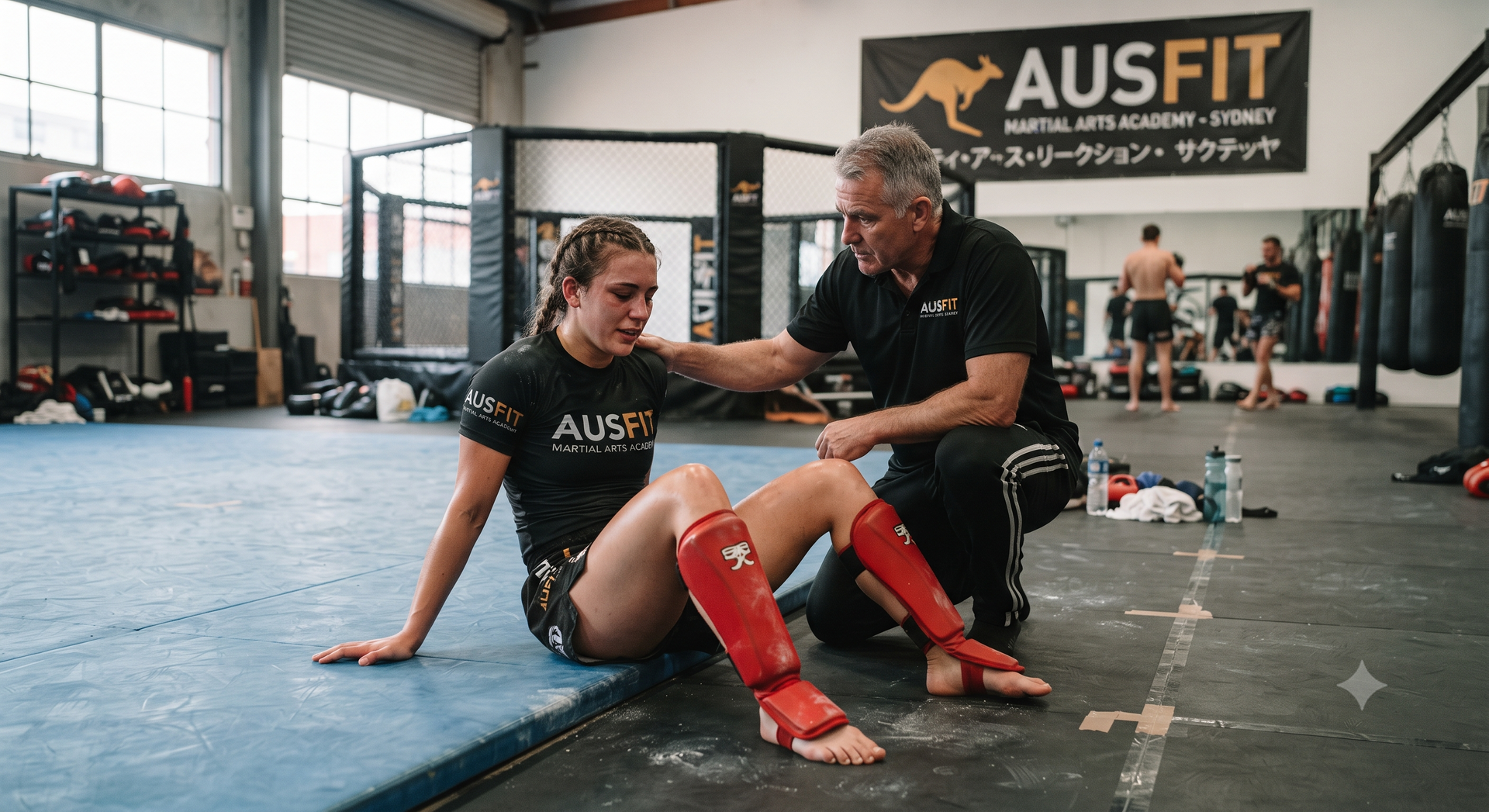
Instructors benefit from knowing the practical, observable signs of a possible concussion rather than relying solely on the injured student's self-report, since a concussed individual is frequently the least reliable judge of their own symptoms in the moments after an impact. Observable signs worth watching for include a student appearing dazed or blank, a noticeable change in coordination or balance, slowed or confused responses to simple questions, or a student who cannot recall the events immediately before the impact occurred. Any of these signs, on their own, is sufficient reason to remove a student from contact activity for the remainder of the session regardless of how the student themselves characterises how they feel.
Baseline Awareness and Repeated Head Contact
Some schools running higher-contact programs, particularly at a competitive level, choose to build a simple baseline awareness of each competing student's normal presentation their usual coordination, their usual speech and cognitive responses — precisely so that a change from that baseline is easier to notice in the moment. This does not require formal clinical baseline testing to be useful; even an experienced coach's general familiarity with how a student normally moves and communicates is a meaningful reference point. What matters more than the sophistication of the baseline is the willingness to act on a clearly observed change from it.
Repeated head contact over time, even where no single incident meets the threshold of a diagnosed concussion, is an area of ongoing research interest and growing caution within combat sports generally. Instructors running high-volume sparring programs, particularly for competitive students accumulating significant contact exposure over a training career, should treat cumulative head contact as a genuine consideration in program design rather than a concern limited only to single acute incidents.
The Role of Protective Equipment and Its Limits
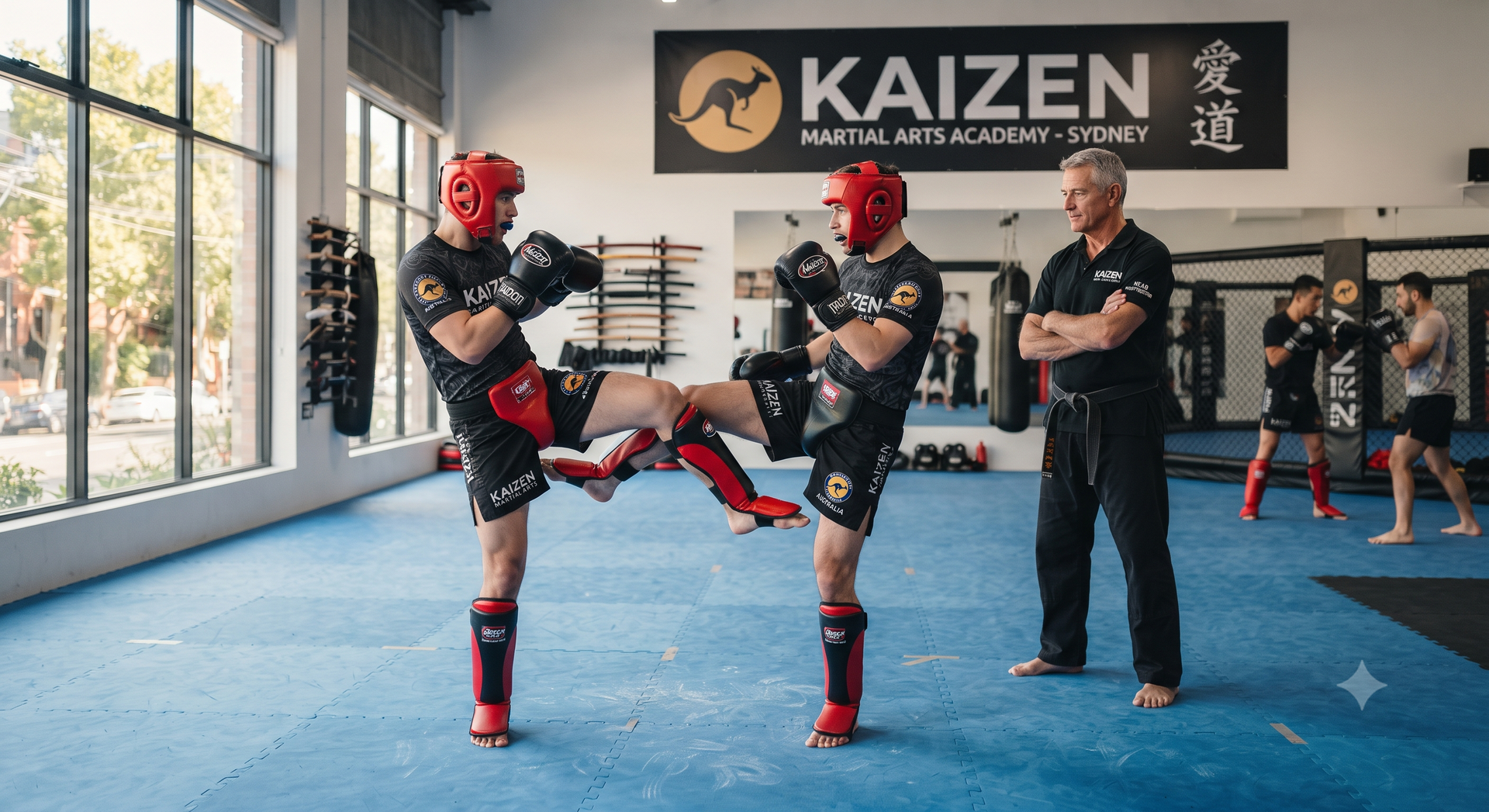
Headgear and other protective equipment play a role in reducing the risk of cuts, abrasions, and some categories of impact, but instructors and students should understand that headgear is not proven to meaningfully reduce concussion risk from rotational forces, and should not be treated as a substitute for appropriate contact control, rule enforcement, and the return-to-training protocol described above. Equipment is one layer of a broader risk management approach, not a solution to concussion risk on its own.
Educating Students and Parents
Part of an instructor's professional responsibility is making sure students and, for junior students, their parents — understand what concussion is, why the return-to-training protocol exists, and why an instructor removing a student from contact activity after a suspected head impact is a protective measure rather than an overreaction. Schools that communicate this clearly, before an incident occurs rather than only in the moment of one, tend to find students and families considerably more cooperative with the protocol when it actually needs to be applied.
We are happy to discuss how concussion management processes interact with your insurance coverage.
Documenting the Return-to-Training Process
Just as with any other injury, the quality of documentation around a suspected concussion matters considerably, both for the student's safety and for your position if a claim later arises. A written record should capture when the suspected incident occurred, what signs were observed, that the student was removed from contact activity, what advice was given regarding medical assessment, and critically written or otherwise verifiable confirmation of medical clearance before the student was permitted to return to any contact training. An instructor relying on a verbal assurance from the student that "the doctor said it's fine" without any documentation of that clearance is in a considerably weaker position than one who has sighted and recorded actual medical confirmation.
A Club-Wide Concussion Policy
Schools running any meaningful level of contact training benefit from a written concussion policy that every instructor, including casual and junior coaching staff, has read and understood — not a document that exists only for the head instructor's own reference. The policy should set out, in plain terms, how a suspected concussion is recognised, the immediate steps to be taken, who is responsible for follow-up with the student and their family, and the minimum evidence required before a return to contact training is permitted. Having this written down in advance means the response is consistent regardless of which instructor is on the mat at the time an incident occurs, rather than depending on the individual judgement and knowledge of whoever happens to be teaching that night.
Talking to Competitive Athletes About Cumulative Risk
Students on a serious competitive pathway, accumulating years of sparring and competition experience, benefit from an honest, ongoing conversation with their instructor about cumulative head contact over the course of a career, rather than this being treated as relevant only in the immediate aftermath of a single acute incident. This is not a conversation designed to discourage genuine competitive ambition, but one that treats the athlete as an informed participant in decisions about their own long-term training load, contact volume, and career-length exposure — an approach consistent with the direction of thinking across professional combat sports more broadly in recent years.
Coordinating With School Sport and Other Codes
Junior students who also play school or club sport in other codes — football codes, for example — may already be operating under a concussion management policy through that other activity, and coordinating with what a student's school or other sporting body already knows and requires around a recent head injury avoids a situation where two different environments are giving a young athlete inconsistent guidance about when it is safe to return to any contact activity at all.
The Bottom Line for Instructors
Concussion management is one of the clearest areas in modern combat sports where the science, the professional standard, and the liability position all point in exactly the same direction. Removing a student from contact activity after any suspected head impact, requiring genuine medical clearance before return, and documenting the process throughout is not excessive caution — it is simply current best practice, and it is the standard we would expect and encourage in every club we work with.
Talk to Us About Your Club's Protocol
If your school does not yet have a written concussion policy, or if it has been some time since your existing one was reviewed against current thinking, we are glad to discuss how this fits alongside your broader risk management and insurance position.
A club that can demonstrate a clear, consistently applied concussion protocol is in a materially stronger position, both for the wellbeing of its students and for how any related claim is ultimately assessed. Getting this right is well within reach of any club, regardless of size, once the standard is written down and genuinely followed.