
Senior and Older Adult Programs in Martial Arts: The Specific Benefits and Considerations
What the Evidence Shows About Martial Arts Training for Older Practitioners
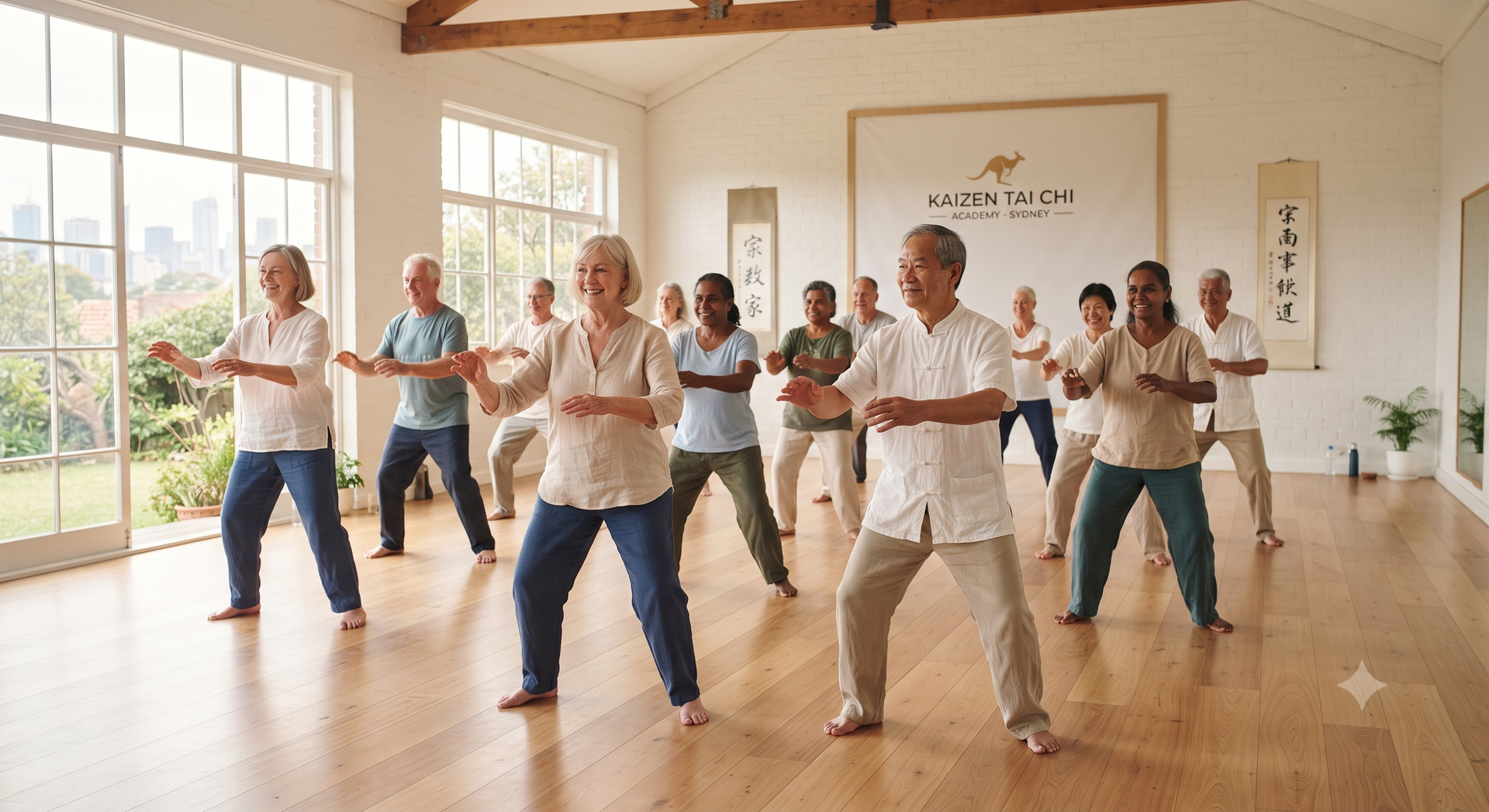
The demographic reality of Australian martial arts schools is changing. A significant and growing proportion of students in many clubs are forty, fifty, sixty, or older people who have come to the arts later in life, or who have trained since youth and continued into stages of life where the physical demands and the benefits of training look different to what they did at twenty-five.
This demographic shift creates specific opportunities genuine ones, with real evidence behind them and specific considerations that instructors and club owners should understand.
The Fall Prevention Evidence
The evidence for martial arts training and specifically Tai Chi as an intervention for fall prevention in older adults is among the most robust in the broad category of exercise for healthy aging. Tai Chi's emphasis on balance, weight shifting, spatial awareness, and slow, controlled movement produces measurable improvements in the specific physical capacities that determine fall risk in older adults, and the research consistently shows this translates into reduced fall incidence in practising populations.
Beyond Tai Chi, broader martial arts training produces similar benefits through different routes: the attention to body mechanics, the proprioceptive demands of technique, and the general physical conditioning all contribute to the functional capacity and spatial awareness that reduce fall risk. For schools with senior student populations, understanding this evidence and being able to communicate it clearly to students and their families is genuinely useful.
Adapting Programming for Older Bodies
The adaptation demands on an instructor working with older students are real. Warm-up requirements are different. Recovery between intense activities is different. The specific injuries and physical limitations most common in older practitioners — shoulder impingement, knee osteoarthritis, previous spinal surgery require modification knowledge that not all instructors have developed if they have primarily trained and taught younger populations.
AMACS instructor courses, which MAAIS refers clients toward for professional development, address these adaptation principles as part of the sports science content relevant to diverse student populations.
Designing Class Structure for Mixed-Age Groups
Many schools do not have the enrolment numbers to run a dedicated seniors-only program and instead integrate older students into general adult classes. This is workable, but it requires deliberate structure rather than simply hoping the class self-regulates. A longer, more thorough warm-up benefits every student in the room but is particularly important for older joints and connective tissue. Building in options at each stage of a drill — a full-intensity version and a reduced-impact version of the same technique allows older students to participate fully in the same class without either being excluded from the activity or pushed beyond an appropriate intensity.
Partner pairing deserves the same deliberate thought discussed elsewhere in our health and safety content: an older student paired with a much younger, more physically dominant partner in a live sparring or grappling exercise carries a different risk than the same pairing among students of comparable age and conditioning, and instructors should be actively managing this rather than leaving pairing to chance.
Informed Participation and Communication With Older Students
Older students taking up martial arts, particularly for the first time, benefit from a direct and honest conversation at enrolment about their own health history, any relevant medical conditions, and any physical limitations the instructor should be aware of. This is not a substitute for medical clearance where that is appropriate for a particular individual's circumstances, but an instructor who has this conversation upfront is considerably better placed to structure that student's training appropriately than one who learns of a relevant limitation only when it becomes a problem mid-class.
The Growing Market Opportunity
Beyond the safety and program-design considerations, the demographic shift toward older students represents a genuine business opportunity for schools willing to build programming that speaks directly to this population. Older adults are, on the whole, a highly consistent and long-tenured student demographic once they commit to training, with less of the high turnover common in some younger adult cohorts. Schools that develop a genuine specialisation in senior-friendly programming communicated honestly and evidence-based rather than as a marketing gimmick are tapping into a segment of the population that is often underserved by mainstream fitness offerings built primarily around younger, more able-bodied users.
The Insurance Consideration
A significant older adult component in your student population is worth disclosing accurately to your insurer, not because it necessarily creates a problem but because the risk profile of a school serving a significant older adult population differs from one serving primarily young adults and children, and accurate representation of your actual demographic allows your policy to be appropriately structured.
This is a straightforward addition to make to your disclosure at renewal or the moment your program shifts meaningfully in this direction, and it is worth raising directly with us rather than assuming your existing policy already accounts for a demographic shift that occurred gradually since it was last reviewed.
Marketing Senior Programs Responsibly
Schools building a genuine offering for older adults should be careful about how the benefits are communicated. It is appropriate and genuinely useful to reference the general evidence base around balance, fall prevention, and healthy aging when describing a program. It is a different matter, and one that strays into territory instructors are not qualified for, to make specific health claims about an individual prospective student's own condition or to suggest a program will address a named medical issue for that person. General, evidence-based framing of the benefits of the activity is appropriate; individualised health claims are not, and the distinction is worth being deliberate about in any marketing material produced for a senior-focused program.
Building Confidence Through a Trial Period
Older adults considering martial arts for the first time, often after decades without any comparable physical activity, benefit particularly from a low-pressure trial period that allows them to experience a genuinely appropriate class before committing. Schools that offer this well pairing the trial with an honest conversation about pacing, modification options, and what a typical week of training would involve for someone at their starting fitness level tend to convert this cautious, often anxious demographic into some of their most loyal long-term students, precisely because the initial experience matched what was promised rather than being a generic class the prospective student happened to feel out of place in.
Working Alongside Health Professionals
Some of the most successful senior-focused programs are the ones where the instructor has built genuine referral relationships with local physiotherapists, general practitioners, and allied health professionals in their area. A physiotherapist confident that a local martial arts school runs sensible, appropriately modified classes for older clients is a genuine referral source, and this kind of professional relationship is built on the school's programming and communication actually living up to the claims made about it, not on marketing alone.
Insurance and Referral Networks Both Reward Consistency
Whether it is a health professional deciding to refer clients your way or an insurer assessing your renewal, both are ultimately forming a view of your school based on consistency between what you say you do and what your documented practices actually show. A school that can produce clear evidence of accurate disclosure, sensible programming, and honest record-keeping is in a stronger position on both fronts than one relying on reputation alone, and the habits described throughout this content package genuinely serve both purposes at once.
Instructor Development for This Demographic
Teaching older adults well is a distinct skill that benefits from deliberate development rather than being assumed to follow automatically from general instructing experience. Investing in continuing education specific to this population through AMACS courses or equivalent professional development is a meaningful signal to prospective senior students and their families that the school takes this demographic's specific needs seriously, and it is directly relevant to the safety outcomes discussed throughout this piece.
A Long-Term View
Schools that build a genuine senior program are, in effect, building for the long term in two senses at once: supporting the long-term health of an aging population of practitioners, and building a stable, loyal segment of their own student base for years to come. Approached honestly and safely, this is one of the more genuinely rewarding directions a martial arts business can grow in.
Speak to Us About Your Senior Program
If your school is building or growing a senior-focused offering, we would encourage a conversation about your policy alongside that growth. Getting the disclosure right from the outset means you can focus on the program itself rather than a paperwork concern sitting quietly in the background.
Done well, senior programming is one of the clearest examples in this entire content package of good business practice and good risk management being the same thing, rather than being in any tension with one another. Get the modifications right, get the disclosure right, and the rest tends to follow.