
Building a Risk Management Framework for Your Martial Arts School
The Operational Foundation That Makes Your Insurance Work
Insurance is an essential component of running a martial arts school — but it is not the only component of managing risk. In fact, the most effective approach to risk in a martial arts business combines two things: appropriate insurance cover that responds when incidents occur, and sound operational risk management practices that reduce the likelihood and severity of those incidents in the first place.
At MAA Insurance Services, we work with clients not just as insurance brokers but as genuine business partners who understand the martial arts industry. Part of that partnership involves helping our clients think about risk management beyond the policy document. This article outlines the key elements of an effective risk management framework for a martial arts school — and explains how each element interacts with your insurance cover.
Why Risk Management Matters for Insurance
There is a practical and a philosophical reason to take risk management seriously.
The practical reason: insurers assess your risk management practices when they underwrite your policy. A school with documented safety procedures, proper equipment maintenance records, current instructor qualifications, and organised incident records presents a different risk profile from one that has none of these things. Well-managed schools generally have access to better policy terms and more competitive premiums. Poorly managed ones may find that insurers apply exclusions, restrictions, or significant premium loadings — or decline to offer cover at all.
The philosophical reason: insurance is a financial safety net for when things go wrong. But your first goal should be to stop things from going wrong in the first place. Every injury prevented is not just a claim avoided — it is a student who didn't get hurt, an instructor who doesn't carry the emotional weight of a preventable incident, and a school community that remains intact and trusting.
The best insurance clients we work with are not the ones who never have claims — they are the ones who are genuinely committed to safety and who have structured their operations accordingly. The two things are deeply connected.
Element One: Instructor Qualifications and Ongoing Development
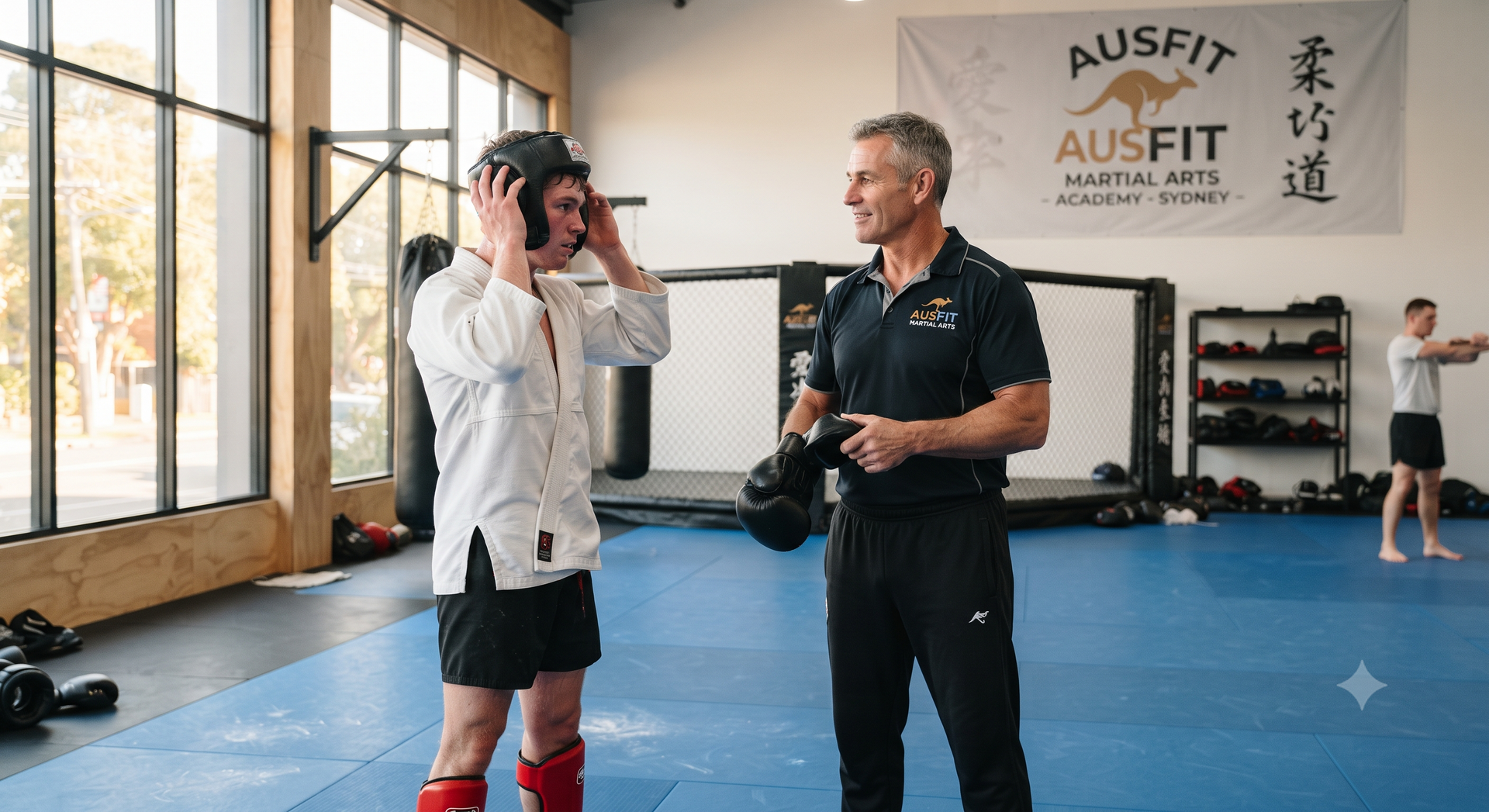
The foundation of any martial arts school's safety framework is the qualification and ongoing development of the people delivering instruction. This is not just about satisfying an insurer's minimum requirements — it is about ensuring that every person on the mat has the skills, knowledge, and judgement to teach safely.
At a minimum, every instructor should hold a rank appropriate to the material they are teaching. But rank alone is not sufficient. Teaching martial arts requires a specific skill set that is distinct from practising it: the ability to read a class, identify students who are struggling or at risk of injury, modify activities for different ability levels, and respond calmly and competently when something goes wrong.
Formal instructor training — through Martial Arts Australia, a relevant national body, or a recognised governing organisation — provides this skill set and is recognised by insurers. Investing in instructor training is an investment in both safety and insurance position.
Ongoing professional development matters too. The martial arts world evolves, and so does understanding of safe training practices. Regular exposure to new ideas about injury prevention, coaching methodology, and student welfare makes your instructors better and your school safer.
Practical steps: Maintain a register of all instructors — their rank, their formal qualifications, their accreditation status, and their Working With Children Check status where applicable. Review this register at least annually and at policy renewal time. Ensure that accreditation and screening clearances are current before an instructor resumes teaching after a lapse.
Element Two: Student Registration and Onboarding
Every student who trains at your school should be registered, and that registration process should capture the information you need to manage their safety and your obligations effectively.
A well-designed registration process includes:
Personal information: Name, date of birth, emergency contact details, and contact information. For junior students, the parent or guardian's details are essential.
Medical and health disclosure: A structured health questionnaire that asks students to disclose relevant medical conditions, previous injuries, current medications, and any other health factors that could affect their participation. This is not just good practice — it is a genuine safety measure. A student who discloses a previous spinal injury or a heart condition needs to be accommodated appropriately. A student who withholds this information and is subsequently injured presents a different liability picture than one whose condition was known and managed.
Participation agreement / informed consent: A document that outlines the nature of the activities, the risks inherent in martial arts training, and the student's acknowledgement that they understand and accept those risks. These documents are sometimes called waivers, but the term can be misleading — they do not waive all liability, and they do not replace your duty of care. They do, however, demonstrate informed consent and form part of your risk management record.
Privacy notice: Under Australian privacy legislation, you are required to inform individuals about how their personal information is collected, used, stored, and disclosed. Your registration process should include a clear and accurate privacy statement.
Keep registration records securely and maintain them for an appropriate period. Claims involving injuries can arise long after the incident — and for junior students, limitation periods may extend well into adulthood. Having complete records accessible over the long term is a genuine risk management asset.
Element Three: Premises Safety and Equipment Maintenance
The physical environment of your dojo or gym is a fundamental safety consideration. A well-maintained, appropriately equipped training space reduces the incidence of slip, trip, and fall injuries, equipment-related incidents, and environmental hazards.
A premises safety program for a martial arts school should include:
Regular equipment inspection: Mats, bags, protective equipment, and other training tools should be inspected on a documented schedule. Worn, damaged, or compromised equipment should be repaired or removed from use. Keeping an inspection log — with dates, findings, and actions taken — demonstrates that you manage this proactively.
Floor and surface maintenance: Mats that have shifted, curled edges, gaps between sections, or worn surfaces are a genuine trip and fall hazard. Inspect and adjust mat layouts regularly. Ensure that the floor under the mats is clean and free of moisture.
Lighting and ventilation: Training spaces should be appropriately lit. Poor lighting increases the risk of collision and fall injuries. Ventilation matters for student health, particularly in heated training environments.
Hazard identification: Conduct regular walkthroughs of your facility looking for potential hazards: obstructions near the training area, unsecured equipment, exposed fixings, slip hazards in changing areas or toilets. Document what you find and what you do about it.
External areas: If your school has a car park, exterior paths, or outdoor training areas, include these in your hazard assessment. A student who slips in your car park before they even enter the dojo is still on your premises, and their injury is still your potential liability.
Element Four: Class Structure and Session Management
How you structure and manage your classes has a direct bearing on injury risk. Some practical principles that well-managed schools apply:
Structured warm-up and cool-down: Injuries are more likely to occur in poorly warmed muscles, and recovery is important for ongoing student wellbeing. A properly structured class that begins with an appropriate warm-up and concludes with a cool-down is both safer and more professional.
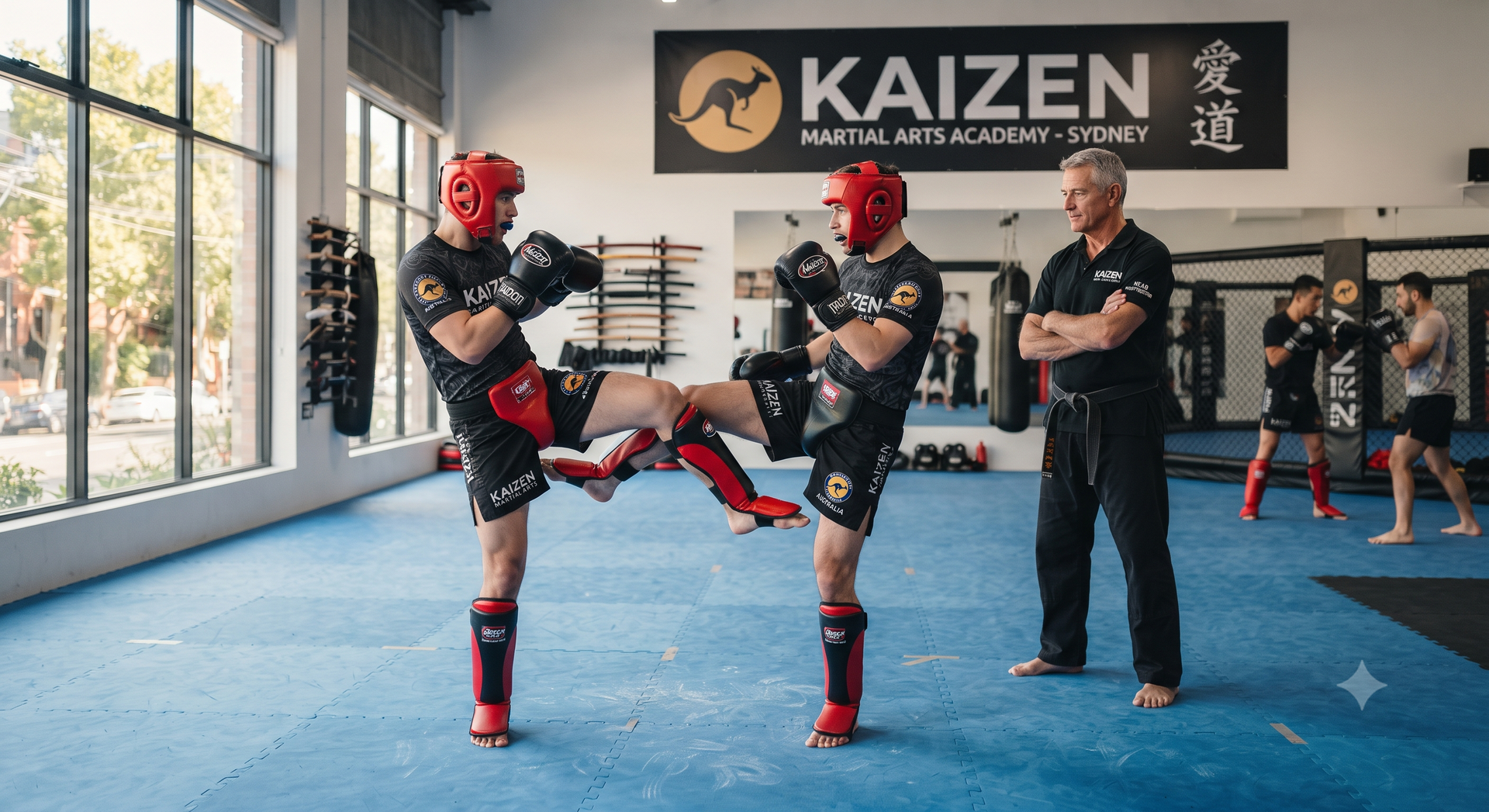
Appropriate pairing and grouping: When students are paired for partner work, drilling, or sparring, the pairing should be appropriate — by size, weight, experience level, and physical capability. A significant size or experience mismatch in contact training is a meaningful injury risk.
Progressive intensity: Classes that escalate intensity too quickly — particularly for newer students — increase the injury risk. Progressive skill development and gradual intensity escalation are safer and generally more effective pedagogically.
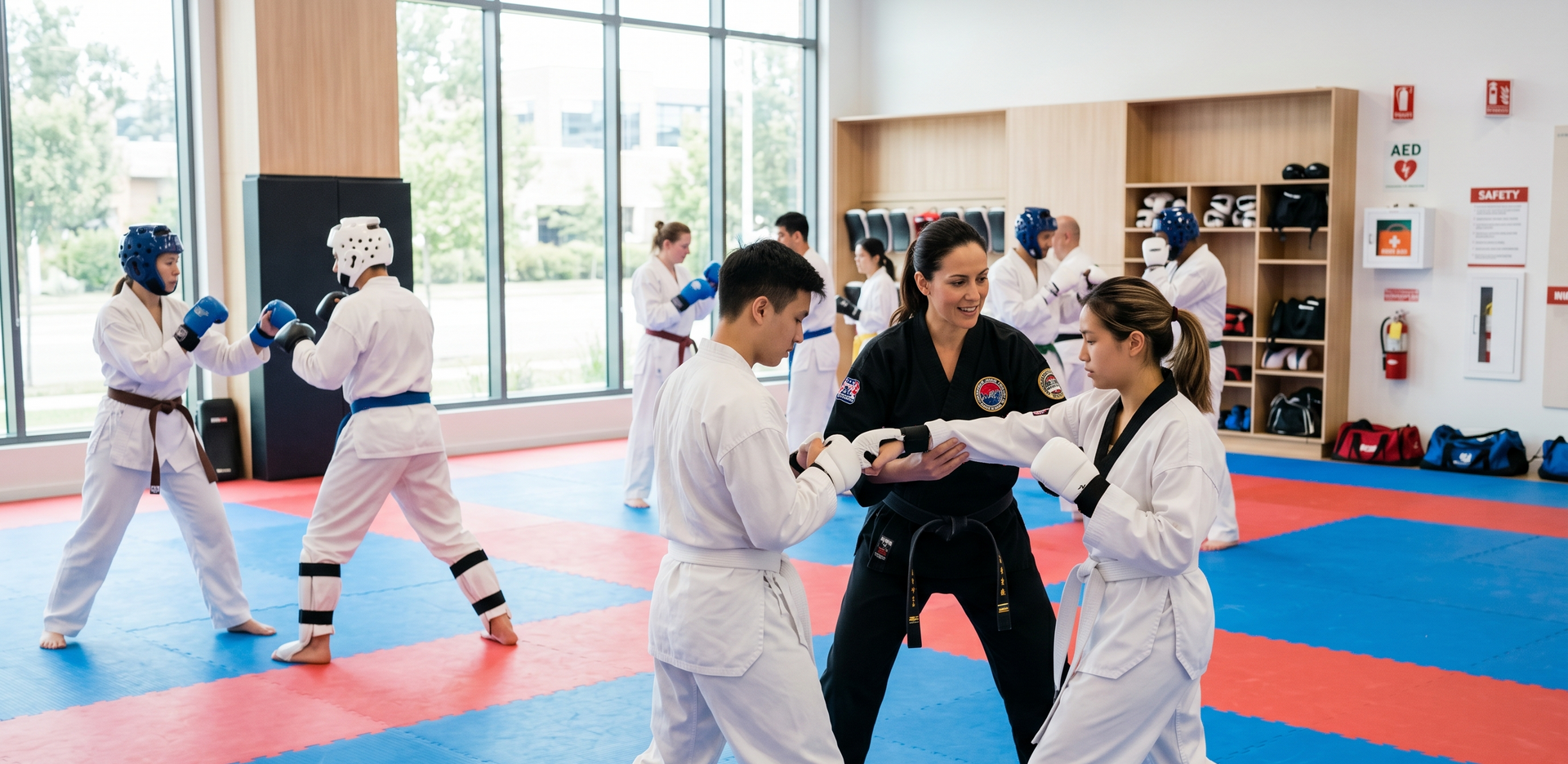
Student monitoring: An instructor who is genuinely watching their class — not distracted by administration, phone use, or conversation — is better placed to identify when a student is struggling, in pain, or at risk of injury. Active supervision is a genuine safety measure.
Session records: Recording class attendance — who trained, in which session, with which instructor — seems administrative but can be genuinely valuable if a claim arises. Knowing that a student was present in a specific class on a specific date, and that the session was supervised by a qualified instructor, is important information.
Element Five: Incident Recording and Response
When something goes wrong — even when it is minor — having a clear and consistent process for recording and responding to incidents is essential.
An incident record should capture: the date, time, and location of the incident; the names of the people involved; a factual description of what happened; any witnesses; the nature and apparent extent of any injury; the first aid or other immediate response provided; and any follow-up actions taken.
This documentation serves several purposes. It creates a factual record while the event is fresh. It demonstrates that incidents are managed systematically rather than ignored or buried. It provides the information your insurer needs if a claim arises. And it contributes to your ongoing risk management by identifying patterns — if the same type of incident keeps occurring, your incident records reveal this and prompt you to address the underlying cause.
Notification to your insurer: If an incident occurs that could potentially give rise to a claim — even if no immediate claim has been made — notify your insurer or broker as soon as practicable. Do not wait for a formal demand to arrive. Prompt notification preserves your rights under the policy and allows the insurer to begin managing the situation appropriately.
First aid capability: Ensure that your school has appropriate first aid resources available and that at least one person present at each class holds a current first aid qualification. This is both a safety measure and a demonstration of responsible operation.
Element Six: Communications and Social Media
The way your school communicates — internally with students and families, and publicly through social media and marketing — is a risk management consideration in its own right.
Clear, professional communication about your school's operations, policies, and expectations reduces misunderstandings that can give rise to complaints or disputes. A parent who is well-informed about the nature of the training their child is undertaking, the supervision arrangements in place, and the school's approach to student welfare is less likely to be surprised by an incident and more likely to respond constructively if one occurs.
Social media policies matter too — particularly for schools with junior programs. Clear guidelines about what school social media accounts will and won't post (including regarding photos and videos of junior students), and about direct communication between instructors and students, reduce the risk of reputational incidents and support your child safeguarding framework.
Bringing It Together: Insurance and Risk Management as Partners
A robust risk management framework makes your insurance work better. It reduces the frequency of incidents that give rise to claims. It demonstrates to insurers that you take your obligations seriously, which supports your access to good policy terms. And when incidents do occur — because in a contact sport environment, some always will — it provides the documentation and process that allows claims to be managed effectively.
We are proud to support our clients not just with policy placement but with practical resources to build their risk management capability. Our value-added support pack includes resources designed to help school operators formalise their operational practices.
If you would like to discuss your current insurance arrangements, review your risk management approach, or explore what better cover might look like for your school, contact us at maainsuranceservices.com.au or call our office. We are here to help you build a school that is not just well insured, but genuinely well run.
This article contains general information only and does not take into account your individual circumstances, objectives, or needs. Please review the relevant Product Disclosure Statement and speak with a qualified adviser before making any insurance decision.