
Tradie Insurance: Why We Offer It and Who Needs It in Our Community
Extending the Martial Arts Network Into the Trades
It is a reasonable question: why does a martial arts insurance specialist also arrange Tradie Insurance?
The answer is straightforward once you understand the community we work in. The martial arts and fitness industry is not just instructors and studio owners. It is also the electricians, builders, plumbers, and tradespeople who fit out dojos, maintain gym facilities, build competition platforms, and construct the physical environments where martial arts is practiced. Many of these tradespeople are themselves martial arts practitioners or family members of practitioners people whose professional lives and martial arts lives overlap.
When these clients ask us to help with their trade insurance, we help them — because we know how to, and because the relationship is there.
What Tradie Insurance Covers
The core components of Tradie Insurance address the specific risks of trade work: Public Liability for damage or injury caused by the work or the presence of the tradesperson on a client's site; Tool and Equipment Cover for the significant capital value of trade tools that are used daily and represent serious replacement cost if lost or damaged; and in some cases, income protection that addresses the self-employed tradesperson's financial exposure if injury prevents them from working.
The specific combination that makes sense depends on the trade, the scale of the operation, and the particular exposures involved a sole-trader electrician has different needs to a small building company with apprentices. We have experience across the common trade categories and can help identify the right structure.
The Self-Employed Reality
Most tradespeople in Australia are self-employed or operating as small business owners, which means their workers compensation situation is different to that of an employee. Self-employed tradespeople generally need to specifically arrange their own personal injury and income protection coverage, because workers compensation as it applies to employees does not automatically extend to them.
This is a gap that is worth addressing deliberately rather than discovering in the event of a serious work-related injury.
Public Liability in the Field: What It Actually Responds To
It is worth being concrete about what Public Liability for a tradesperson is actually doing, because the term is often understood only loosely. If an electrician working in a client's home accidentally damages flooring while running new cabling, or a plumber's work results in water damage to a downstairs unit in an apartment building, Public Liability is the cover that responds to the third-party property damage claim that follows. It is not a cover for the quality or workmanship of the job itself that is a separate consideration entirely, addressed through contract terms and, in some trades, statutory warranty obligations rather than an insurance policy.
Understanding this distinction matters because tradespeople sometimes assume Public Liability is broader than it is, and are surprised to learn that a dispute over whether a job was done correctly is not something their liability policy is designed to resolve.
Tool and Equipment Cover: A Bigger Number Than Most Tradespeople Expect
When tradespeople total up the replacement value of everything in their van or work trailer power tools, specialist equipment, ladders, testing devices — the figure is often considerably higher than they initially estimate, simply because the cost accumulates gradually over years of individual purchases rather than being considered as a single capital sum. A theft from a work vehicle, unfortunately common in many areas, can represent a loss well into five figures for an established tradesperson, and this is precisely the scenario Tool and Equipment Cover is designed to address.
Getting an accurate, current declared value for your tools rather than a rough guess carried over from years ago is one of the simplest things a tradesperson can do to make sure this cover actually matches what they stand to lose.
Income Protection for the Self-Employed Tradesperson
The financial exposure of a serious injury is different for a self-employed tradesperson than for an employee. An employee with a workplace injury generally has access to workers compensation payments that continue a portion of their income during recovery. A self-employed tradesperson without their own income protection arrangement in place has no equivalent safety net an injury that prevents them from working is an injury that stops income immediately, while ongoing business costs and personal expenses continue regardless.
This is frequently the single most consequential gap we identify when reviewing a self-employed tradesperson's overall insurance position, and it is often the easiest to have overlooked simply because it does not come up in conversation the way Public Liability does when quoting for a job.
Contract Works and Site-Specific Considerations
Tradespeople working on larger renovation or fit-out projects including dojo and gym fit-outs specifically may also need to consider Contract Works cover, which addresses damage to the works themselves while a project is underway, as distinct from damage to a third party's existing property. Whether this is relevant depends on the scale and nature of the specific job, and it is a question worth raising with us directly for any project beyond routine maintenance or small repair work.
Choosing the Right Structure for Your Trade
There is no single Tradie Insurance package that suits every trade equally. A sole operator doing residential electrical work has a different profile to a small commercial building company with several apprentices on the books. The right combination of Public Liability limit, tool cover value, and income protection structure depends on the specifics of what you do, who you work for, and how your business is structured.
If you are a tradesperson in our community, we are here for your business too.
How Much Public Liability Cover Is Enough
A frequent question from tradespeople is what limit of Public Liability cover they actually need, and the honest answer is that it depends heavily on the scale and nature of the work being carried out and, in many cases, on what a particular client or head contractor specifically requires before allowing the tradesperson onto a site. Commercial builders, larger renovation projects, and government or institutional clients often specify a minimum limit as a condition of engagement, and a tradesperson bidding for this kind of work without confirming their policy meets the stated requirement risks losing the job at the contract stage regardless of the quality of their trade skills.
For residential and smaller commercial work, the appropriate limit is more a function of the potential consequence of things going wrong the value of the property being worked on, the presence of expensive fixtures or equipment nearby, and the general scale of the sites typically worked on. This is a conversation worth having specifically rather than defaulting to whatever limit a generic online quote tool suggests without reference to your actual work.
Working Across the Martial Arts and Fitness Fit-Out Space
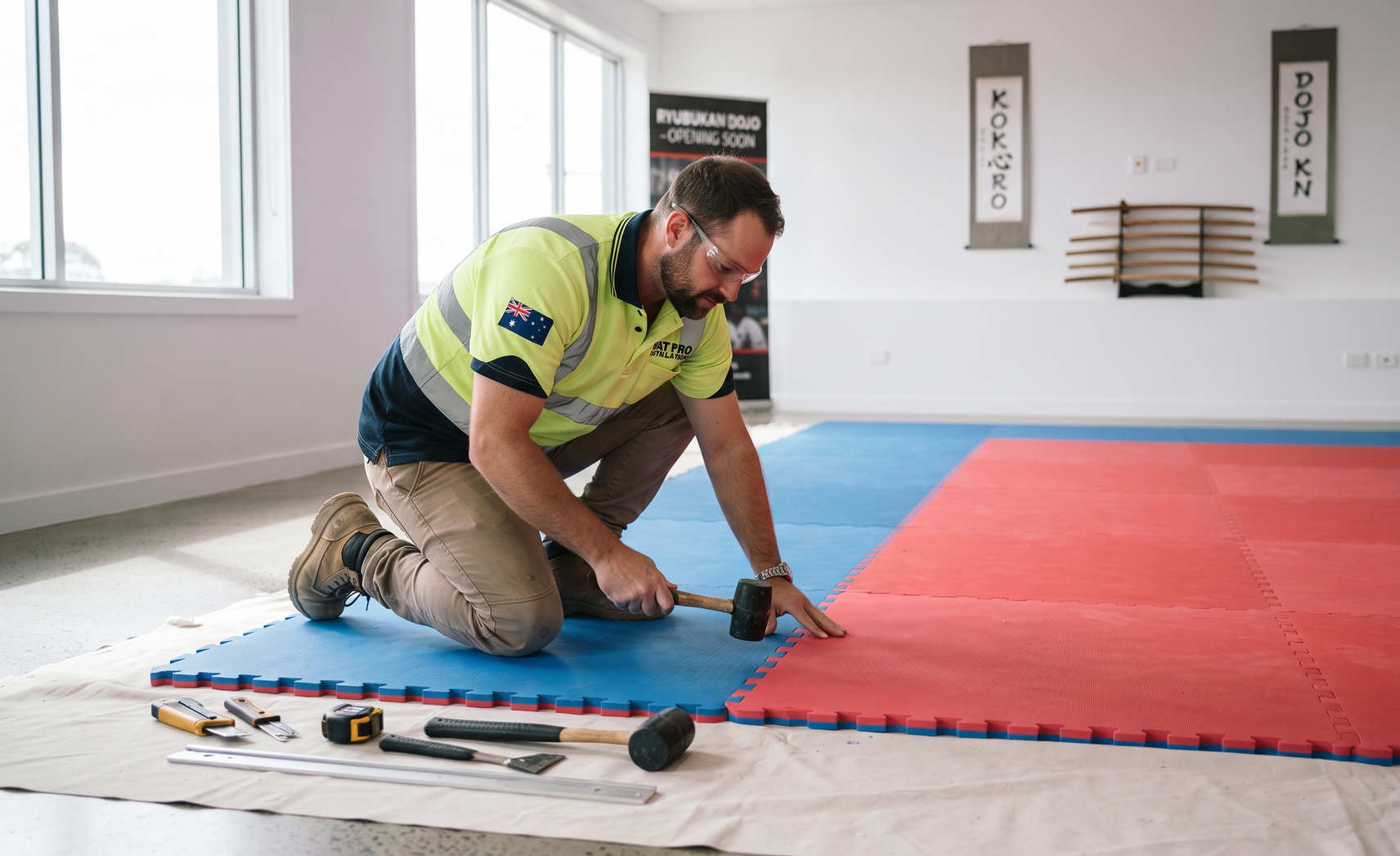
We see a specific and recurring category of client: tradespeople who specialise in, or regularly take on, fit-out work for dojos, gyms, and fitness studios matting installation, structural work to accommodate heavy equipment, electrical work for specialised lighting or air conditioning suited to a training environment. This is genuinely specialised work with its own considerations, and tradespeople active in this niche benefit from the same kind of specific understanding we apply to the martial arts businesses themselves, because we already understand what these venues need to function safely and compliantly.
Apprentices and Subcontractors
Trade businesses that grow beyond a sole operator, taking on apprentices or engaging subcontractors for larger jobs, need to think through how their insurance structure accommodates these additional people. An apprentice working under direct supervision generally sits differently to a subcontractor engaged as an independent business in their own right, and the insurance implications including whether workers compensation obligations apply — differ between the two. Getting this structure right at the point a business first takes on additional workers, rather than assuming the original sole-trader policy automatically extends, avoids a gap that could otherwise only become apparent at claim time.
Reviewing Cover as the Business Grows
A trade business that has grown significantly since its insurance was first arranged more vehicles, more staff, a wider range of work undertaken — benefits from the same annual review discipline we recommend to every martial arts client. What was an appropriate policy for a sole operator starting out is not necessarily the right structure for the same business several years and several employees later, and treating the policy as a living document that grows with the business avoids the same kind of drift discussed throughout this content package in relation to martial arts schools.
One Broker, Two Sides of Your Life
For many of our clients, the value of having one broker across both their martial arts business and their trade business is straightforward: a single point of contact who already understands their working life, rather than two entirely separate relationships that never speak to each other. If your professional life spans both worlds, we would rather be the ones helping you make sense of both than have you managing two disconnected arrangements with two different providers.