
Public Liability and Civil Liability Insurance for Martial Arts Schools
Why Public Liability Alone Often Isn't Enough

If you're setting up a new martial arts school, expanding your existing operation, or reviewing your cover at renewal time, the question of which types of liability insurance you need — and why — is one of the most important conversations you can have with your broker.
We work with martial arts and fitness businesses of all shapes and sizes across Australia: small community dojos, corporate Tai Chi programs, MMA gyms, Aikido schools at council venues, home-based clubs, and everything in between. One thing that surprises many new operators is just how different the insurance requirements can be depending on the nature of your operation.
This article covers the core liability products relevant to martial arts businesses, the scenarios where each applies, and why the type of venue, activity, and student base all matter when it comes to getting the right cover in place.
Public Liability and Civil Liability: Understanding the Difference
These two terms are sometimes used interchangeably in everyday conversation, but they refer to distinct products — and in a martial arts context, both are typically relevant.
Public Liability (PL) insurance responds when a third party — a student, a visitor, or a member of the public — suffers bodily injury or property damage as a result of your business activities. If a student is injured during class and makes a claim against your school, or if a visitor trips over equipment and is hurt, your Public Liability policy is the primary cover that responds to that claim.
Civil Liability / Professional Indemnity (PI) cover responds when your professional advice, instruction, or guidance causes loss or harm. In a martial arts context, this becomes relevant when a student follows your specific coaching direction and suffers an injury as a result — for example, if you directed them to perform a technique incorrectly, or if your training program was later found to have caused a chronic injury. The distinction matters because a standard Public Liability policy will not always respond to claims that are fundamentally about the quality or appropriateness of your professional instruction.
We typically look to combine both of these covers for martial arts instructors and schools. A policy that only covers one and not the other leaves a meaningful gap in your protection.
Do You Need Both PL and PI for a New Aikido School at a Council Venue?
This is exactly the kind of question we love receiving, because the honest answer is: almost certainly yes, and here's why.
When you operate from a council venue, the council itself will generally require you to hold a minimum level of Public Liability cover — typically $20 million — before they will allow you onto the premises. This is standard across most local government areas in Australia. So PL cover is non-negotiable from a venue access perspective alone.
But what about Civil Liability / Professional Indemnity? When you are delivering structured instruction — teaching Aikido techniques, guiding students through specific movements, assessing their progress and correcting their form — you are acting in a professional capacity as an instructor. If a student later claims that your instruction contributed to their injury, and the allegation is that you gave incorrect or inappropriate guidance, that claim may not fall within the scope of a Public Liability policy. This is where Civil Liability / Professional Indemnity becomes essential.
For a new school, the risk of a professional indemnity claim may feel remote — but the cost of defending one without appropriate cover is very real. We strongly recommend new operators include this cover from day one rather than retrofitting it after an incident has occurred.
Corporate Tai Chi and Non-Static Classes: A Special Consideration
Corporate wellness programs have grown significantly over the past decade, and Tai Chi is among the most popular offerings. If you are running Tai Chi classes at your clients' workplaces — moving between different venues from week to week — your insurance arrangements need to reflect this operational reality.
A policy tied to a fixed address will not automatically cover you at other locations. More importantly, a standard gym or studio policy is typically written around a single, identified premises. When your business is inherently mobile — when the venue changes depending on the corporate client — you need a policy that explicitly covers your activities across multiple locations or at any location within Australia.
We structure cover for mobile instructors and corporate wellness providers that addresses exactly this. The key things we look at include: whether the policy covers activities at third-party premises (such as office buildings and corporate facilities), whether there are any exclusions for venues that aren't owned or leased by the insured, and whether the specific activities you deliver — including any Tai Chi that involves physical contact or correction — are captured within the policy scope.
If you're running a corporate program and you're not certain your current cover follows you to the client's site, please speak to us before your next class.
Running a Club from a Home-Based Venue
The home-based dojo — sometimes literally a purpose-converted shed, garage, or backyard space — is a genuinely common arrangement in the Australian martial arts community. Many experienced instructors operate small, boutique schools from their own properties, often with a close-knit group of regular students.
This creates a specific and important insurance consideration. Standard home and contents policies do not cover business activities conducted on residential premises. If a student is injured in your home dojo and makes a claim, your home insurer is very likely to decline the claim on the basis that you were conducting a commercial activity on the property.
You need a standalone Public Liability policy that is specifically written to cover your teaching activities at a residential venue. This is something we arrange regularly, and it is more straightforward than many people expect. The key is to be transparent with the insurer about the nature of the venue, the number of students involved, the activities conducted, and whether there are any structural features of the training space that could contribute to injury risk.
Civil Liability / Professional Indemnity cover is equally relevant for a home-based operator, for the same reasons it applies anywhere else: if your professional instruction is later challenged as a contributing factor to a student's injury, you need that additional layer of protection.
Stage Combat and Screen Combat Choreography: Is It Covered?
This is a question we find genuinely interesting, because stage and screen combat choreography occupies an unusual space — it draws heavily on martial arts techniques but is delivered in a performance and artistic context rather than a traditional martial arts training context.
Whether a martial arts liability policy covers stage combat choreography open to the public depends on how both the policy and the activity are defined. Some standard martial arts policies may not automatically capture this type of instruction, particularly where the setting is theatrical, the participants are not traditional students, and the techniques involve weapons handling or deliberately performative physical contact.
If you are offering stage or screen combat classes, we recommend discussing this specifically with your broker rather than assuming your standard martial arts school cover extends to it. We can look at the nature of what you're delivering and work to find a policy structure that explicitly covers it — whether that means an extension to your existing cover or a separate arrangement.
Off-Site Corporate Training: Martial Arts and Close-Quarter Skills for Businesses
Some martial arts and close-quarter fitness (CQF) training providers deliver their services directly to corporate clients — running programs for security personnel, corporate teams, or professional groups at the client's site. This is a distinctly different operation from running a school or club, and it carries a different risk profile.
For this kind of operation, you typically need cover that: responds at third-party premises, covers a team of instructors (not just a single principal), accommodates the specific techniques and physical contact involved in the program, and responds to both third-party injury claims and professional instruction claims.
If your business model involves taking a team of trainers into corporate environments, we would strongly recommend a policy review. Off-site corporate training is not a scenario that a generic martial arts school policy is necessarily structured to address.
Mixed-Use MMA Gyms: Classes, Functional Fitness, and 24/7 Access
The modern mixed martial arts facility often operates across multiple distinct functions simultaneously: scheduled martial arts classes (MMA, BJJ, Muay Thai), functional fitness or conditioning sessions, and in many cases, open-access 24/7 gym facilities where members train independently.
Each of these functions carries a different risk profile. The supervised class environment is relatively well understood by insurers. The 24/7 unsupervised access element is a more complex risk — members are using equipment and sometimes training with partners without a qualified supervisor present. This element in particular can create coverage questions that are not always clearly resolved in a standard martial arts school policy.
We can arrange cover for mixed-use facilities that encompasses all three elements: supervised classes, structured fitness training, and unsupervised open-access operations. It requires clear disclosure of all activities to the insurer, and in some cases a more specialised policy structure, but it is absolutely achievable.
Full Contact Sparring: Are You Covered?
This is among the most important questions any martial arts school operator can ask, and the answer depends entirely on your specific policy.
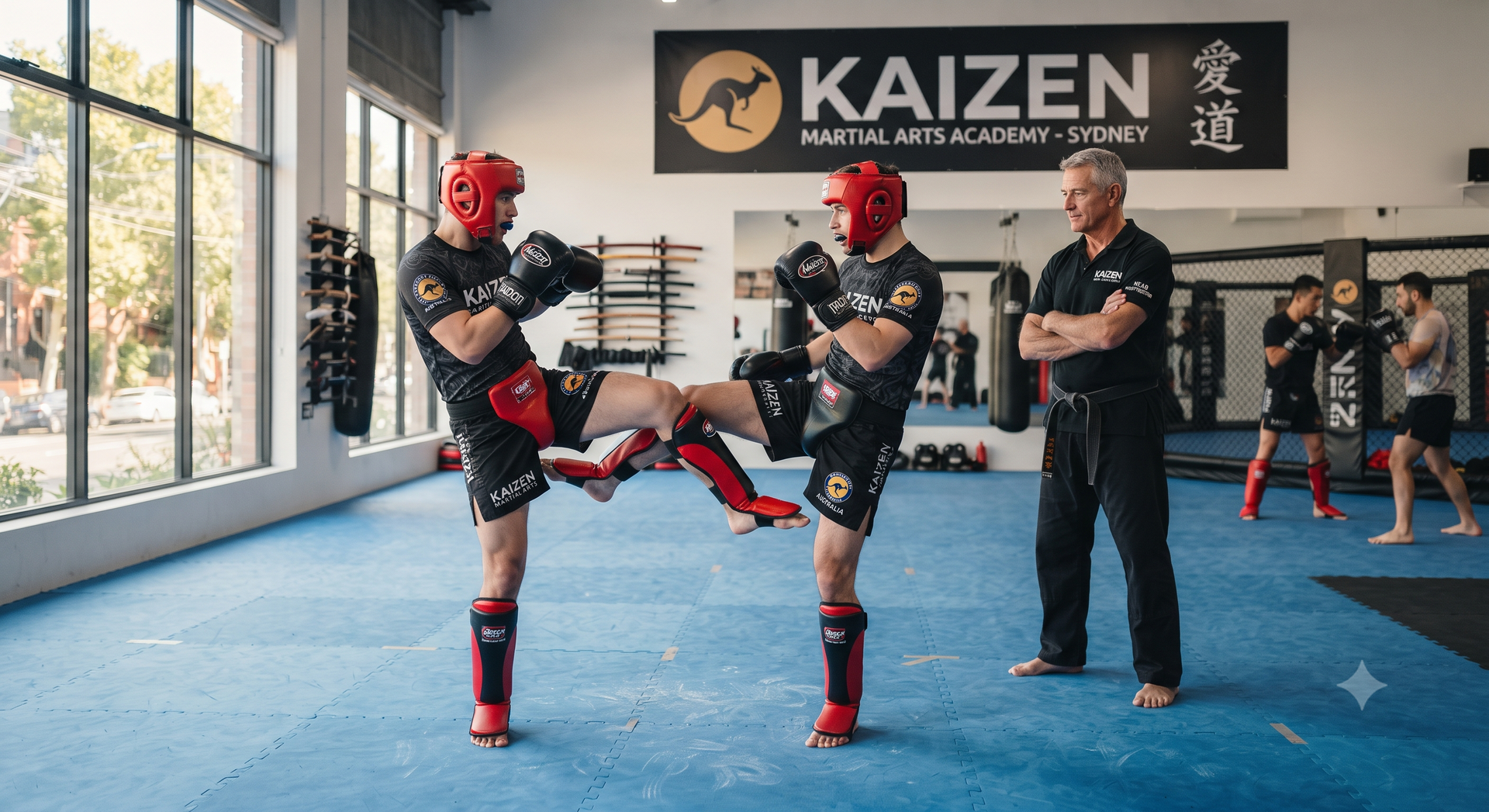
Contact sparring — particularly at the full-contact level — is among the higher-risk activities in the martial arts environment. Some standard policies either exclude it outright, impose conditions on how it must be supervised, or require specific disclosure at the time of application. If you haven't explicitly confirmed with your broker that your policy covers contact sparring at the level your school conducts it, you may be operating with a gap in your cover.
We are entirely familiar with this landscape. We work with schools that include full-contact sparring as part of their regular curriculum, and we know which insurers are prepared to cover this activity — and under what conditions. Don't assume it's included. Confirm it explicitly.
Speak With Us
Liability insurance for martial arts and fitness businesses is not a product that benefits from a one-size-fits-all approach. The combination of venue type, activity type, student demographics, instructor structure, and operational model all influence which policy design is most appropriate for your specific situation.
We take the time to understand your operation before we recommend a solution. With access to a broad panel of specialist insurers and more than two decades of industry experience, we are positioned to match you with cover that genuinely fits — not a generic policy that approximates what you need.
Visit us at maainsuranceservices.com.au, call our office, or use our Quick Quote form to start the conversation. We're here to help you get it right.
This article contains general information only and does not take into account your individual circumstances, objectives, or needs. Please review the relevant Product Disclosure Statement and speak with a qualified adviser before making any insurance decision.