
Managing Injuries in Training: The Instructor's Responsibility
What Good Injury Management Looks Like From First Aid to Follow-Up
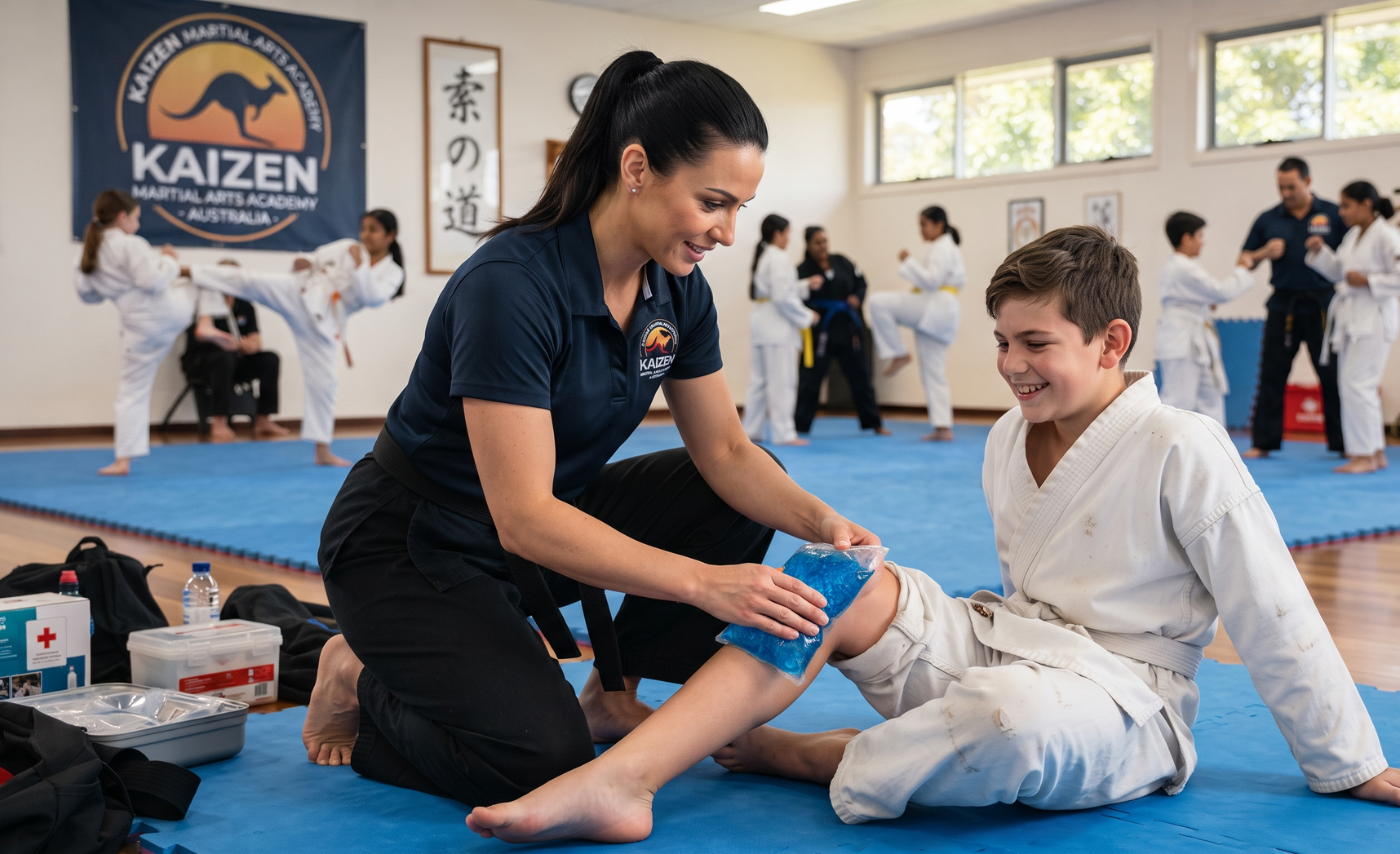
Injuries in martial arts training are not aberrations. They are a reality of physical practice, and an instructor who trains students long enough will experience them. What separates instructors who handle injuries well from those who handle them poorly is almost never speed of response in the moment most instructors respond quickly and appropriately to acute injury. It is the quality of the process around the incident: the documentation, the communication, the follow-up, and the reflection on whether something in the training environment should change as a result.
First Aid Certification Is the Baseline
Every person teaching contact-based martial arts in Australia should hold a current first aid certification. This is a minimum standard, not a point of distinction. It ensures that in the first minutes after an injury occurs the minutes when the quality of response matters most for both the injured person and the subsequent management of any potential claim the instructor can act appropriately rather than improvising.
Beyond first aid, having a clear plan for escalation when to call an ambulance, how to contact emergency services, where the nearest emergency facilities are is worth establishing and communicating to all staff rather than leaving it to improvised decision-making under stress.
Documentation as Immediate Priority
After the immediate safety of the injured person is addressed, documentation becomes the priority. An incident report completed within hours of an event, while details are clear and witnesses are available, is significantly more useful than one completed days later from memory. What happened, when, during what activity, who was involved, who witnessed it, what was observed, what first aid was administered these details should be captured factually, without speculation about cause or fault.
This documentation is what your insurer will request if a claim arises. It is also the information that allows you to reflect honestly on whether a training activity, a pairing decision, or a supervision practice should change.
The Follow-Up That Most Instructors Skip
Following up personally with a student after an injury not to manage the legal situation, but genuinely to ask how they are, whether they have received appropriate care, and to communicate that you care about their wellbeing is one of the most human and practically important things an instructor can do. Students who feel genuinely cared for after an injury are significantly less likely to escalate matters than those who feel that their welfare became an afterthought once the class moved on.
Building an Incident Response Plan Before You Need One
The instructors who handle injuries best are almost always the ones who have thought through the process in advance rather than improvising it for the first time under stress. A written incident response plan does not need to be complicated. It should cover who is responsible for administering first aid, who makes the call on escalating to emergency services, who completes the incident report and by when, who communicates with the injured student's family if the student is a minor, and who if anyone beyond the instructor themselves needs to be informed, including notifying your broker for anything beyond a minor incident.
Having this plan written down and reviewed with all instructors, including casual or junior coaching staff, means the response in the moment is executed rather than invented, which matters considerably when the person managing the incident is themselves under stress.
Common Injury Types and Specific Considerations
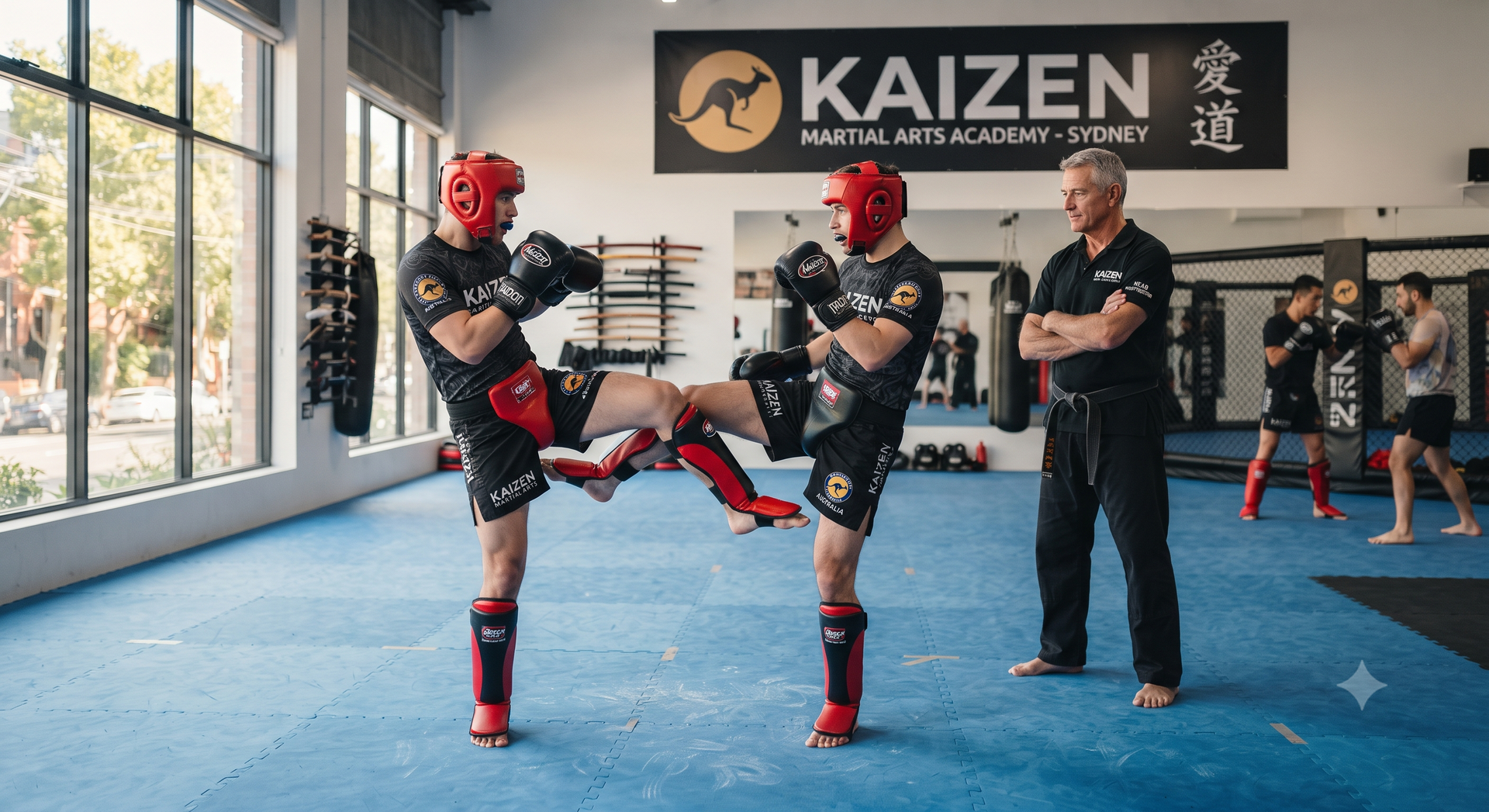
Different training activities produce recognisably different injury patterns, and understanding these patterns helps an instructor anticipate rather than merely react. Striking-based training produces a higher proportion of hand, wrist, and facial injuries. Grappling-based training produces a higher proportion of joint injuries — particularly to the knee, shoulder, and elbow arising from submissions and takedowns. Throwing arts carry a distinct risk profile around the impact of falls, which is precisely why break-fall technique is taught before live throwing is introduced in most curricula.
An instructor who understands which injury types are most likely in the specific activity being taught at any given moment is better placed to supervise proactively watching for the specific warning signs of an impending injury of that type rather than treating supervision as a generic watching-over-the-room exercise.
Communicating With Parents and Guardians of Junior Students
Injury communication involving a minor carries additional considerations beyond the injury management already described. Parents or guardians should be contacted promptly and directly rather than learning of an incident secondhand from their child after the fact. The same factual, non-speculative approach used in incident documentation should guide this conversation describing what happened and what first aid was provided, without offering opinions on fault or cause that have not been established. Schools that handle this communication well tend to build significant trust with their junior program's parent community over time, which pays dividends well beyond the immediate incident.
Reviewing Incident Patterns Over Time
A single incident report is useful in the moment. A collection of incident reports reviewed periodically is considerably more valuable, because patterns become visible that are not obvious from any one event in isolation. If a particular class, a particular pairing practice, or a particular piece of equipment appears disproportionately often across several incident reports, that is exactly the kind of signal that should prompt a genuine look at whether something in the training environment needs to change a conversation we are always happy to have alongside our clients when reviewing their claims history at renewal.
We provide risk management resources including incident reporting documentation to all of our clients. It is part of how we support the businesses we work with, not just the policies.
Supervision Ratios and Class Size
The likelihood of an instructor noticing the early warning signs of an impending injury a student tiring, a pairing becoming mismatched, technique breaking down under fatigue — is directly related to how many students that instructor is realistically able to watch closely at one time. A class that has grown well beyond what a single instructor can meaningfully supervise, without a corresponding increase in assistant instructors or a change in how the class is structured, is a class where injury risk quietly rises even though nothing about the activity itself has changed.
There is no single correct ratio that applies to every style and every activity a stationary pad work class tolerates a higher instructor-to-student ratio safely than a live sparring session does but club owners experiencing genuine growth should treat class size as an active variable to manage deliberately, bringing on additional qualified staff or capping enrolment where the alternative is quietly reduced supervision quality.
Learning From Every Incident, Not Just the Serious Ones
It is tempting to reserve full incident documentation for the injuries that feel serious in the moment, and to let minor knocks and niggles go unrecorded. We would encourage the opposite habit. Minor incidents, recorded consistently over time, are exactly the data that reveals a pattern before it produces something serious a particular drill that keeps producing minor strains, a particular time in the session when fatigue-related mistakes cluster. Treating documentation as a genuine safety tool, rather than a piece of paperwork reserved for the days something goes seriously wrong, is what turns incident reporting from a compliance exercise into something that actually improves how your school trains.
Notifying Your Broker: What Actually Warrants a Call
Instructors are sometimes unsure where the threshold sits for telling their broker about an incident, as distinct from simply recording it internally. As a general guide, anything involving a request for or provision of medical treatment beyond basic first aid, any incident that could plausibly lead to a claim being made, and certainly anything involving an ambulance callout or hospital attendance is worth a prompt call to your broker, even if no claim has been raised by the injured party. Early notification does not commit you to making a claim, but it does mean your broker and insurer are working from the same accurate, timely information as you are, which is consistently the position that produces the smoothest outcome if a claim is later lodged.
Building This Into New Instructor Onboarding
Injury management standards are only as good as the least experienced instructor's understanding of them. Any club bringing on new coaching staff, whether senior graded instructors or junior assistants, should build a walk-through of the school's injury management and documentation process into onboarding, rather than assuming new staff will absorb the standard by observation alone over time.
The Overall Standard We'd Encourage
Good injury management is not measured by whether injuries occur they will, in any genuinely physical practice but by how consistently and professionally they are handled every time. First aid, honest documentation, genuine follow-up, and periodic reflection on patterns are the four pillars of this, and a school that has all four in place, applied consistently by every instructor, is in the strongest possible position both for its students and for its own protection.