
Insurance for Non-Traditional Martial Arts Operations: Mixed Gyms, Off-Site Training, and Specialist Venues
Insuring the Modern, Multi-Purpose Martial Arts Business
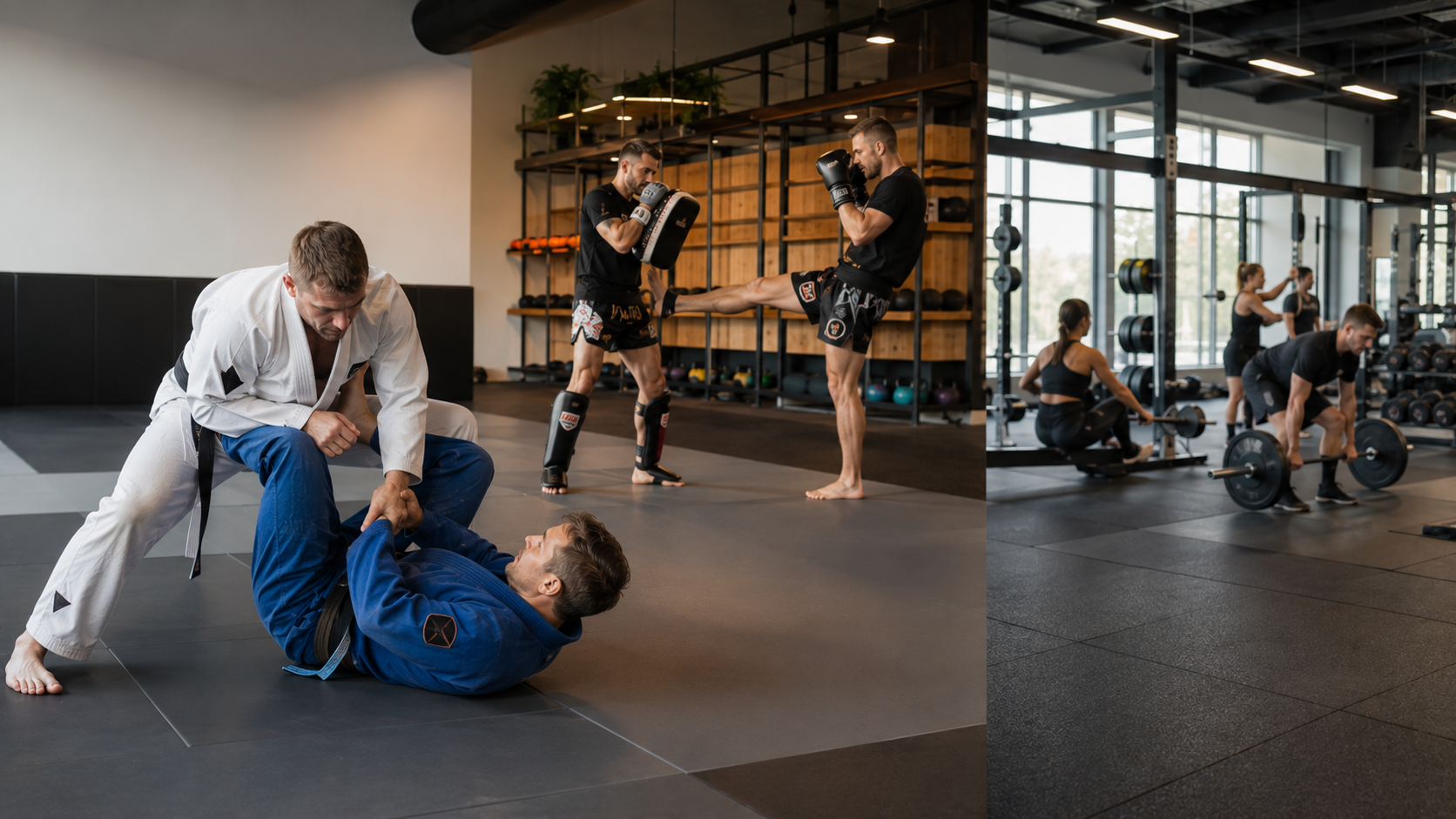
The martial arts and fitness industry in Australia is more diverse than ever. Today's operators are running mixed-use MMA gyms that blend structured martial arts classes with 24/7 open gym access. Corporate Tai Chi providers are delivering wellness programs inside office towers. Close-quarter fitness trainers are taking their skills directly to business clients. And many experienced instructors are running boutique schools from purpose-built spaces at home.
Each of these models represents a genuine, viable business. But each also presents insurance questions that a standard, off-the-shelf policy may not adequately address. At MAA Insurance Services, we work with operators across all of these models every day, and we want to share what you need to know about insuring a non-traditional or mixed-use martial arts or fitness operation.
The Mixed-Use MMA Gym: Three Businesses Under One Roof
Let's begin with one of the most complex scenarios we encounter: the full-service MMA gym that combines structured martial arts classes (MMA, Brazilian Jiu Jitsu, wrestling, Muay Thai), group fitness and conditioning sessions, and open-access 24/7 gym membership where members use equipment independently, with no instructor present.
This is, effectively, three distinct business models operating simultaneously under a single roof. And from an insurance perspective, each one has a distinct risk profile.
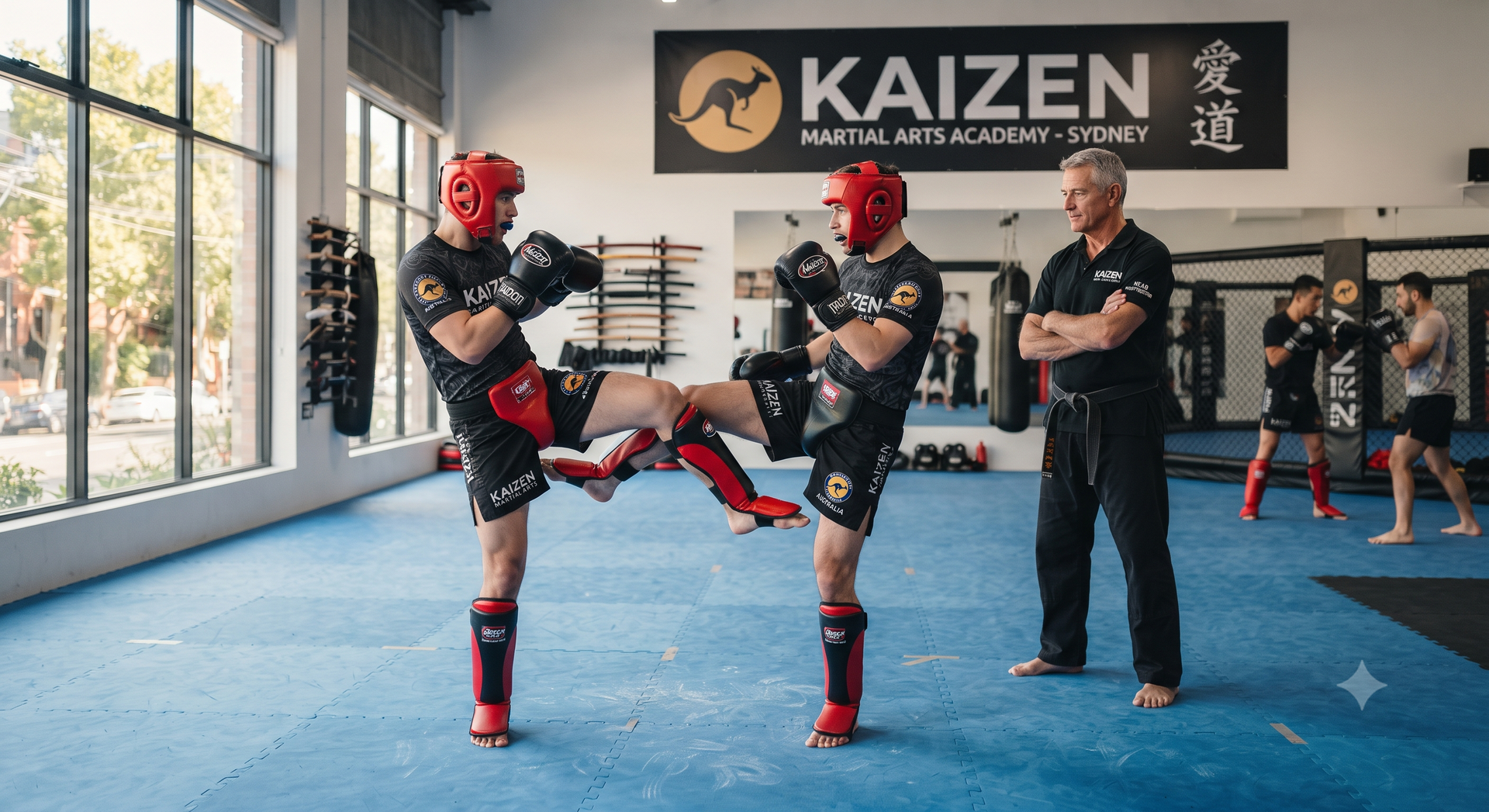
Structured martial arts classes involve contact, physical instruction, and technique-specific coaching. The risks are well understood: student injuries during drilling, sparring, rolling, or pad work. These activities need to be explicitly listed in your policy, and the qualification of instructors delivering them needs to satisfy the insurer's requirements.
Group fitness and conditioning — circuits, strength training, conditioning drills — is a lower-contact environment but carries its own injury risk, particularly with higher-intensity programming. If you employ or engage personal trainers or conditioning coaches to run these sessions, their activities need to be covered under the policy, and their qualifications (Cert III/IV in Fitness, or equivalent) may be assessed.
24/7 unsupervised access is the most challenging element from an insurer's perspective. When a member is using equipment alone at 2am and injures themselves, the absence of supervision is a factor that insurers consider carefully. The risk management framework you have in place — induction procedures, equipment maintenance records, emergency contact systems, security camera coverage — all become highly relevant in this context.
The key to insuring a mixed-use facility is full transparency with your insurer about all three functions. Declaring only the martial arts classes and omitting the 24/7 access element — whether inadvertently or otherwise — creates a serious risk that claims arising from the undeclared element will be declined.
We can structure cover that genuinely addresses all of these elements. It requires a more detailed application process than a simple single-activity policy, but the outcome is a policy that actually reflects your business.
Full-Contact Sparring: Confirm Your Cover Explicitly
We want to address this specifically because it is a risk that applies not just to MMA gyms but to virtually every contact-based martial arts school in Australia.
Contact sparring — and particularly full-contact sparring — is one of the activities most likely to give rise to an injury claim. It is also one of the activities most commonly treated with nuance (and sometimes exclusion) in insurance policy wordings.
Some policies cover light or controlled contact sparring as part of normal class activities, but explicitly exclude full-contact competition or full-contact sparring sessions. Others cover sparring at all contact levels but impose conditions — such as mandatory headgear, supervision requirements, or belt/rank minimums for participants. Others still require specific disclosure of the contact level your school operates at, and adjust premium accordingly.
If you run contact sparring as part of your regular curriculum — and in MMA, BJJ, boxing, Muay Thai, Kyokushin, and many other disciplines, you certainly do — the absolute minimum you should do is confirm in writing with your broker that your policy covers the specific type and level of contact involved.
This is a conversation we actively encourage. We would rather a client understand exactly what they are covered for than make assumptions that leave them exposed.
Off-Site Corporate Training: Taking Martial Arts to the Workplace
The corporate wellness sector has embraced martial arts-derived training in a significant way. Close-quarter fitness (CQF), defensive tactics, corporate Tai Chi, and similar programs are being delivered by qualified martial arts instructors directly to businesses — at their premises, on their terms.
If your business model involves taking a team of trainers to deliver these services at client sites, here is what your insurance needs to address:
Cover at third-party premises. A policy that only covers activities at your own facility or a specified address will not respond to incidents at a client's office, warehouse, or facility. Your policy needs to explicitly cover activities conducted at locations that you do not own or lease.
Cover for a team of instructors. If you are sending multiple trainers to client sites — possibly to different sites simultaneously — your policy needs to respond for each of those individuals, not just for the principal business operator.
Civil Liability / Professional Indemnity for coaching and instruction. When your trainers are providing specific, directed instruction to participants — whether in defensive tactics, conditioning, or close-quarter techniques — and a participant is injured following that instruction, a professional indemnity claim becomes a real possibility. This cover is essential for instructors delivering structured programs to members of the public or corporate clients.
Appropriate activity declarations. If your program involves any physical contact — even controlled contact as part of a self-defence component — this needs to be disclosed to the insurer. Programs with a contact element carry a different risk profile than purely fitness-focused sessions.
The corporate training model is genuinely different from a school-based model, and we take the time to understand your specific program before recommending a policy structure.
Home-Based Dojos: Don't Rely on Your Home Policy
This point cannot be overstated: if you are running a martial arts school from your home — whether from a converted shed, a purpose-built studio on your property, or any other home-based arrangement — your home and contents insurance will almost certainly not cover your teaching activities.
Home insurance products are designed for domestic, residential use. When you introduce a commercial activity — even a small-scale one with a handful of students — you are typically in breach of the residential use conditions of your home policy. An insurer who discovers that you were conducting commercial activities at the time of an incident can decline not just the incident-related claim but potentially the broader home claim as well.
The solution is a standalone Public Liability policy that is explicitly written to cover your teaching activities at a residential premise. This is a product we can arrange for you, and it is generally more affordable than most home-based operators expect.
When we set up this kind of cover, we need to understand: the nature and dimensions of your training space, the maximum number of students you have at any one time, the disciplines taught and the contact level involved, any structural features of the space that could contribute to injury risk (low ceilings, hard surfaces, proximity to other structures), and whether you have any signage or advertising that could attract members of the general public.
Civil Liability / Professional Indemnity is equally important for a home-based operator. The fact that you operate from home doesn't diminish your professional responsibility as an instructor — it just means the venue is different.
Stage and Screen Combat: A Specialist Niche
Stage combat and screen combat choreography — teaching performers how to fight convincingly and safely for theatrical and film productions — is a growing niche in the Australian martial arts space. Practitioners with strong theatrical backgrounds or connections to the screen and performance industry are building genuine businesses around this skill set.
Insuring this activity requires thinking about it in a slightly different way from standard martial arts instruction. The participants are not students working toward martial arts proficiency — they are performers (often not martial artists by background) learning to execute scripted combat sequences safely. The environment is a stage, set, or rehearsal room rather than a dojo. And the activity is inherently performative — the goal is to look dangerous while being safe, rather than to be genuinely combative.
From an insurer's perspective, key considerations include: the background and qualifications of the choreographer, the risk management protocols in place for performances and rehearsals, whether weapon handling is involved (and if so, what types of weapons and under what conditions), and whether the classes are open to the general public or limited to professional or semi-professional performers.
A standard martial arts school policy may not automatically capture stage or screen combat choreography. We will look at what you are actually delivering and work to find a policy structure that covers it appropriately. In some cases, this may involve a dedicated arts or performance industry policy rather than a martial arts-specific one — or a combination of both.
Multi-Location Operations and Franchise-Style Schools
Some martial arts businesses operate across multiple locations — a chain of schools under a single brand, a franchise model, or a head school with satellite training locations. This creates specific insurance considerations.
Each location where classes are delivered represents a covered premises, and each location's activities, supervision arrangements, and physical environment contribute to the overall risk profile. A policy that covers a single location will not automatically extend to additional sites.
When we structure cover for multi-location operations, we look at whether a single policy can be extended to cover all locations under a blanket arrangement, or whether separate policies are needed for different sites. We also look at management liability considerations — particularly relevant for franchise operations or associations where there are directors and committee members whose personal assets could be at risk from decisions made in their organisational roles.
Sporting Associations and National Bodies
Beyond individual schools and gyms, we also work with sporting associations, governing bodies, and national organisations in the martial arts space. These bodies have their own distinct insurance needs:
Management Liability / Association Liability: Protecting the personal assets of committee members, directors, and officers against claims arising from their management decisions. This is essential for incorporated associations and peak bodies.
Event insurance: Tournaments, seminars, gradings, and other association-run events create specific liability exposures that may not be covered under individual school policies.
Broad membership cover: Associations that wish to arrange cover for their affiliated member schools face logistical and administrative challenges that require specialist structuring.
If you represent a martial arts association or governing body and are reviewing your insurance arrangements, we encourage you to contact us for a specialist consultation.
Speak With Us
The common thread across all of these non-traditional and mixed-use scenarios is that they require a broker who takes the time to understand your specific operation before recommending a solution — not someone who selects a pre-packaged product based on a surface-level description of your business.
Our principal broker has over 40 years of experience in the martial arts and fitness industries and more than two decades in insurance. When you describe your operation to us — however unconventional it might be — you are speaking to someone who understands the industry context, the operational realities, and the insurance landscape.
We work with a broad panel of specialist insurers who cover the martial arts and fitness sector, and we know which insurers are most receptive to non-traditional operations, mixed-use facilities, and specialist activity types. Our job is to find you genuine cover that reflects your real business — not a generic policy that fits a simplified version of it.
Visit maainsuranceservices.com.au, call our office, or use our Quick Quote form to start a conversation. Whatever your operation looks like, we want to help you protect it properly.
This article contains general information only and does not take into account your individual circumstances, objectives, or needs. Please review the relevant Product Disclosure Statement and speak with a qualified adviser before making any insurance decision.