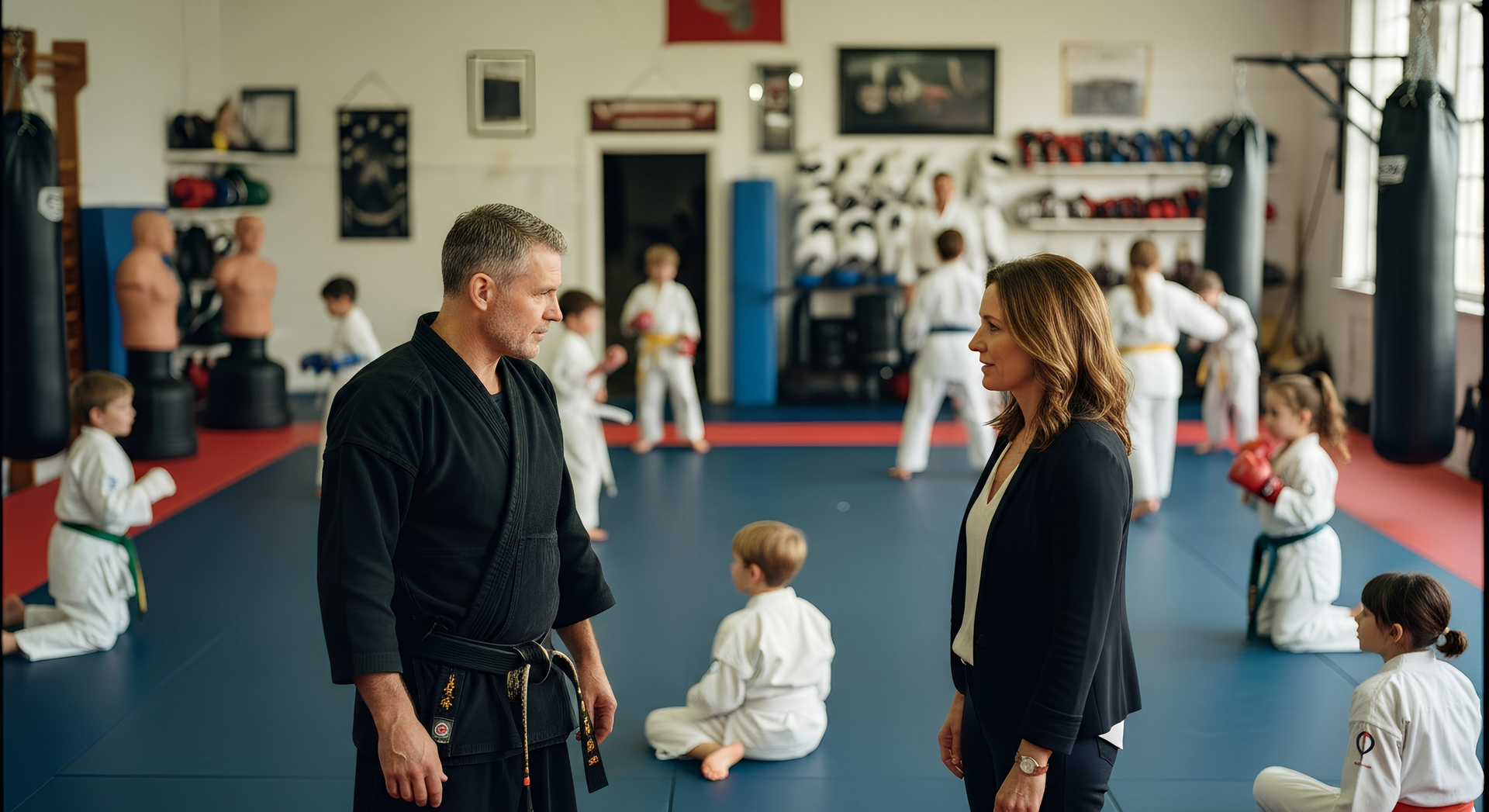
One of the most confronting moments for any dojo owner is this:
A student is injured.
An ambulance is called.
And later — a letter arrives.
Most school owners immediately think in emotional terms. Concern for the student. Concern for reputation. Concern for the school community.
But behind that emotional response sits a legal and financial reality.
So let’s answer the real question directly:
If a student gets injured in your dojo, what actually happens next?
Step One: An Injury Does Not Automatically Mean Liability
Martial arts is a contact-based discipline. Movement, throws, grappling, strikes, falls — these carry inherent risk.
An injury alone does not equal negligence.
For liability to arise, four elements are typically examined:
- Duty of care
- Breach of that duty
- Causation
- Damage
As a martial arts instructor, you owe a duty of care. That is not optional.
The real legal question becomes:
Was that duty breached?
If training was conducted within reasonable standards, supervision was appropriate, mats were safe, and the technique was taught correctly, liability may not exist — even if injury occurred.
Insurance becomes relevant when negligence is alleged, not merely when someone gets hurt.
Step Two: When an Allegation Is Made
If a parent, adult student, or solicitor alleges negligence, the process shifts.
This is where many owners panic unnecessarily.
When properly insured through a specialist provider aligned with martial arts operations, the first step is straightforward:
Notify your insurer immediately.
From that point:
- The insurer appoints legal representation
- Defence strategy is assessed
- Evidence is gathered
- Witness statements may be taken
- Incident reports are reviewed
You are not left to defend yourself alone.
This is one of the most misunderstood elements of insurance — it is not just about paying compensation.
It is about funding defence.
Legal costs can escalate quickly even before liability is established.
Step Three: Documentation Becomes Critical
In nearly every claim scenario I have seen, documentation plays a defining role.
Important documents include:
- Signed membership agreements
- Risk acknowledgement forms
- Incident reports completed immediately
- Instructor qualification records
- Equipment maintenance logs
- CCTV footage (if available)
- Class structure documentation
If you cannot demonstrate structured supervision and reasonable standards, defending a claim becomes more difficult.
Insurance cannot replace poor documentation.
It works best when your operational standards are visible and recorded.
The Youth Factor: Added Sensitivity
When minors are involved, scrutiny increases.
Parents may allege:
- Inadequate supervision
- Excessive force during drills
- Inappropriate student pairing
- Unsafe progression for skill level
The legal environment surrounding children requires careful handling.
A properly structured insurance policy that recognises youth programs is essential.
Not all policies treat junior classes the same way.
Disclosure of youth instruction is critical when arranging cover.
Defence Costs: The Silent Exposure
Many dojo owners assume the largest risk is a payout.
Often, the greater financial burden is defence.
Even if a claim is ultimately dismissed, legal expenses accumulate:
- Solicitors
- Barristers
- Expert witnesses
- Court filing costs
- Medical reviews
Without insurance, those costs are borne personally or through business reserves.
With appropriate cover, defence costs are handled within the policy structure (subject to limits and wording).
This is the quiet strength of specialist insurance.
What If the Injury Was Part of Normal Training?
In martial arts, controlled sparring, grappling, and throwing are standard components.
Courts recognise inherent risk in contact disciplines.
The distinction lies in whether reasonable care was taken.
Was the student appropriately graded?
Was the partner suitably matched?
Were mats in good condition?
Was the instructor attentive?
If training was conducted responsibly, liability may not attach.
But allegations can still be made.
Insurance responds to allegations — not just proven negligence.
That distinction matters.
Reputation and Community Impact
Beyond legal exposure, there is reputational risk.
Parents talk. Students talk. Social media amplifies concerns.
A structured response through your insurer ensures communications are handled carefully.
Reacting emotionally or admitting fault prematurely can complicate defence.
This is why notifying your insurer early is critical.
Let the process unfold professionally.
The Real Question School Owners Should Ask
Instead of asking, “Will I be sued?”
A better question is:
“If I were accused of negligence tomorrow, could I demonstrate professional standards?”
Insurance protects finances.
Standards protect reputation.
The two must work together.
Preventative Measures That Strengthen Protection
While insurance is reactive by nature, your dojo culture should be proactive.
Strong risk management includes:
- Clear grading structures
- Age-appropriate class segmentation
- Instructor training in safe progression
- Immediate written incident reports
- Equipment inspections
- Parent communication transparency
When these elements exist, both your defence and your insurance position strengthen.
Final Perspective
Injuries in martial arts do not automatically lead to legal disaster.
But allegations require structured response.
Specialist insurance aligned with martial arts instruction ensures:
- Defence costs are covered
- Legal representation is appointed
- Claims are assessed professionally
- Financial stability is protected
Your dojo is built on discipline, respect, and structured development.
Your protection should reflect the same philosophy.